ASUS ROG Zephyrus G14: from $1,050 to $3,600, and what the upgrades actually get you
Engadget traces how the G14's US price roughly tripled since 2020, how much of that is hardware versus memory costs, and which changes matter day to day.

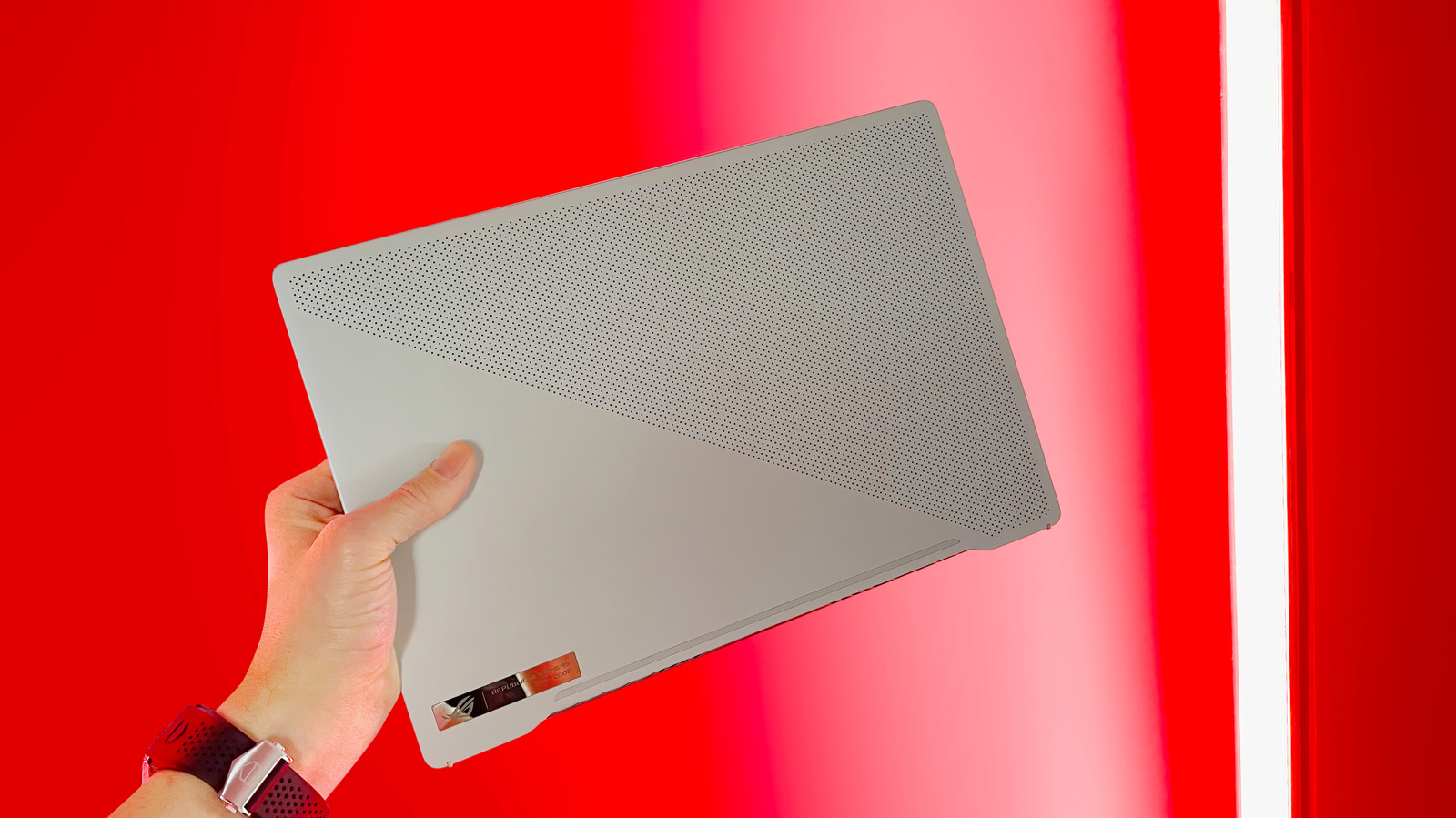
When ASUS launched the ROG Zephyrus G14 in spring 2020, the base model sold for $1,050. Buying directly from ASUS today, the cheapest G14 listed is $3,600, Engadget reports, with Best Buy showing $3,200 at the time of writing. Both figures represent more than a threefold rise over the launch price.
According to Engadget's accounting, general inflation explains only about $320 of the gap. Upgrades to the screen, chassis and graphics between 2020 and 2025 added roughly $750. The remaining $1,400 came in a single generation, as memory prices climbed and cheaper configurations were dropped from the US lineup — nearly two-thirds of the total increase landing in the most recent year.
What changed under the hood
The 2020 base machine combined a Ryzen 7 4800HS, 8GB of RAM, a GTX 1650 and a 60Hz 1080p display. The $1,450 configuration Engadget reviewed paired a Ryzen 9 4900HS with an RTX 2060 Max-Q, 16GB of RAM and a 120Hz panel, at about 3.5 pounds and 0.7 inches thick.
The path since then, per the report: a 2022 redesign around AMD Radeon graphics with a starting price near $1,650; NVIDIA's return in 2023 with an RTX 4060 model around $1,600 and a top RTX 4090 mini-LED model at $3,299; a 2024 redesign adding a 3K 120Hz OLED panel and trimming weight to 3.31 pounds, again from $1,600; and a 2025 launch at $2,499 with an RTX 5070 Ti and 32GB of RAM, reaching $3,200 with an RTX 5080. Engadget notes ASUS quoted a $2,199 starting price at CES 2025, but no configuration at that price went on sale at launch. A cheaper RTX 5060 version was announced in May 2025 at $1,800.
The current model pairs an Intel Core Ultra 9 386H with an RTX 5070 Ti. The $3,200 configuration has 16GB of soldered RAM, a 1TB SSD and a 2880 x 1800 OLED display; the 32GB version is $3,600. Thickness and weight are close to the original. Engadget also cites GamesRadar benchmarks in which this year's RTX 5070 Ti model sometimes outpaced last year's RTX 5080 version.
Why the price moved
Engadget attributes most of the jump to the AI-driven memory crunch. In January 2025, ASUS told partners it would raise prices on some products, citing memory costs tied to AI demand. A thin laptop with fast soldered memory and a 1TB SSD is exposed to both DRAM and flash pricing. ASUS does offer a cheaper 2026 G14 with a Ryzen AI 9 465 and RTX 5060, but it is not currently sold through the US store, leaving the RTX 5070 Ti model as the American entry point. Engadget notes that $3,200 is what the top-spec RTX 5080 model cost at launch, and that the same chip-and-GPU pairing in the dual-screen Zephyrus Duo runs $4,500.
What this means for buyers
Adjusted for inflation, the 2020 G14's $1,050 is about $1,370 today, and no current G14 approaches that. Engadget's practical recommendation is last year's RTX 5060 model, still available at Best Buy, which it describes as the cheapest route into the line while stock lasts.
On the suggested question of which improvements are meaningful in daily use: the evidence supports the OLED display, the lighter chassis and the extra memory as concrete changes, and the RAM soldered to the board as a real constraint on the cheaper configuration. Beyond that, whether the newer silicon justifies the premium is a judgment call the source only partly addresses through benchmark comparisons.
This article is based on Engadget's reporting; pricing and availability reflect the time of that report and may change.
Sources and further reading
See an error? Read our corrections policy or email [email protected].