Samsung 9100 Pro SSD Deals Bring 1TB and 2TB Back Near Launch Prices
A reported Amazon sale cuts Samsung's flagship PCIe 5.0 SSD, but only the smaller capacities return to their original pricing.

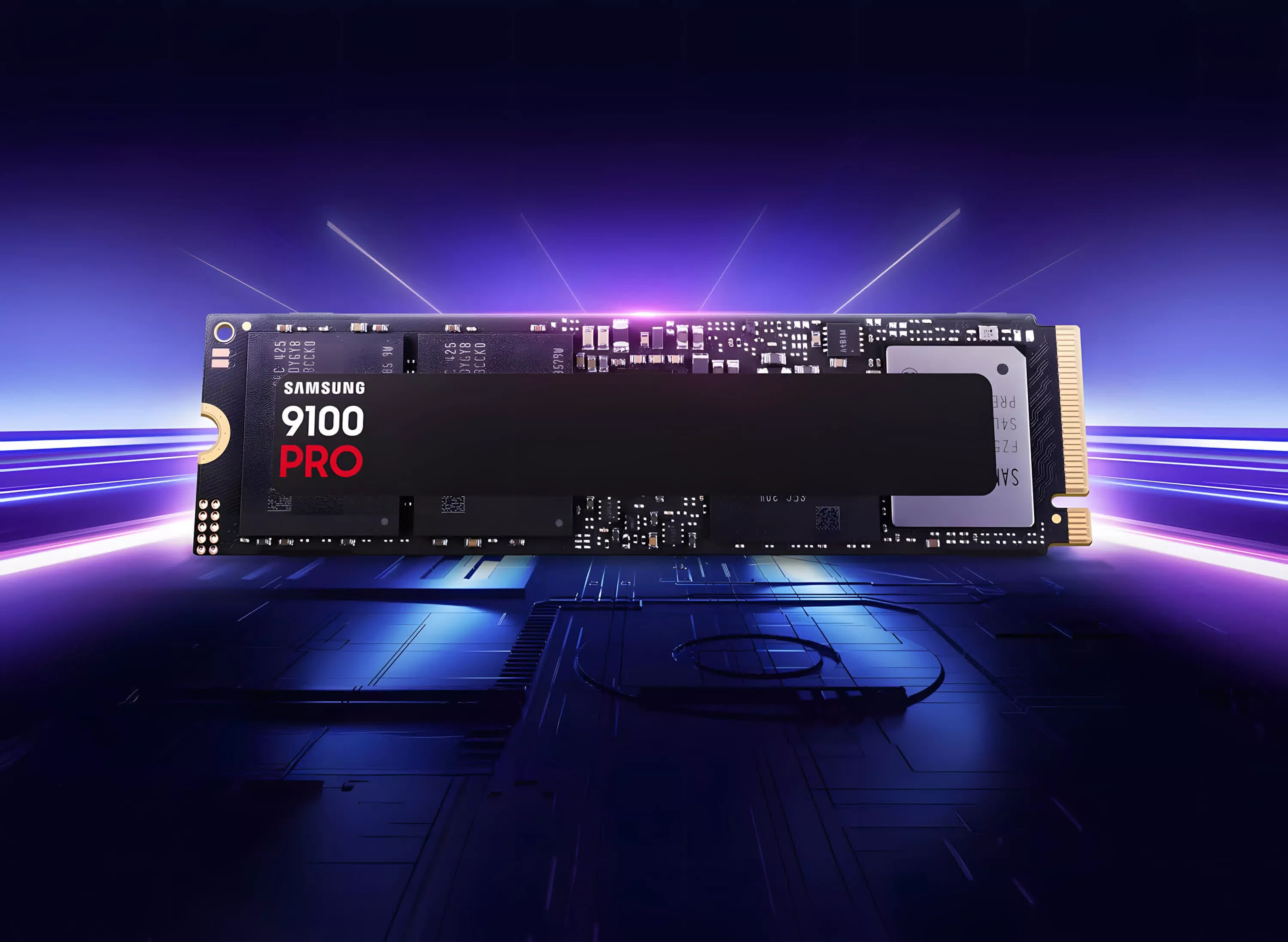
Samsung's flagship consumer SSD, the 9100 Pro, is seeing temporary discounts on Amazon as part of Prime Big Deal Days. According to the original reporting by TechSpot, the 1TB model is listed at $206, about 39% below its $339 list price, while the 2TB variant is priced at $349 after a 49% discount. The larger 4TB and 8TB drives are down to $750 and $2,280, roughly 45% and 16% off their list prices.
The discounts arrive against a backdrop of rising NAND prices. TechSpot notes that retail SSD prices have climbed dramatically over the past year, in some cases by almost 200%. That context matters when evaluating whether a sale is genuinely attractive. At launch, the 1TB model cost $200, the 2TB was $300, the 4TB was $550, and the 8TB arrived later at $1,000. With those launch prices in mind, the current 1TB and 2TB deals land close to their original pricing. The 4TB and 8TB models remain considerably above what they cost at introduction.
For anyone planning a storage upgrade, that gap between the smaller and larger capacities is the central trade-off. The 1TB and 2TB options offer the strongest relative value if the goal is to get flagship-level performance without paying a premium over launch pricing. The 4TB and 8TB versions, while discounted from list, still carry a significant markup compared to their debut prices.
What the 9100 Pro brings to the table is high-end hardware. It uses Samsung's 236-layer V8 NAND and the company's in-house 5nm Presto controller. The drives offer PCIe 5.0 connectivity in the standard M.2 2280 form factor, an endurance rating of up to 4,800 TBW, and random read/write speeds of up to 2,200K and 2,600K IOPS, respectively.
Samsung rates sequential performance across the lineup. The 8TB model reaches up to 14,800 MB/s reads and 13,400 MB/s writes, while the 1TB model hits up to 14,700 MB/s and 13,300 MB/s. The 2TB and 4TB models both list sequential writes at 13,400 MB/s, with reads at 14,700 and 14,800 MB/s. Those are top-tier figures for consumer SSDs, though the practical benefit in everyday use depends on workloads and system support for PCIe 5.0.
The 9100 Pro series was announced in early 2025, and Samsung began selling the 1TB, 2TB, and 4TB models the following month. The 8TB version arrived later in the year. The drives are designed for laptops, desktops, and consoles like the PS5. Samsung also claims the new controller makes them up to 49% more power efficient than the previous 990 Pro.
Beyond the consumer space, Samsung is mass-producing enterprise-class SSDs on the PCIe 6.0 interface. The PM1763 range will launch in 4TB, 8TB, and 16TB capacities, with Samsung claiming the 16TB model can reach sequential reads of 28.4 GB/s and writes of 21.9 GB/s. Random performance is advertised at up to 6,800K and 950K IOPS. According to the company, the drives can transfer a 40GB LLM in just 1.4 seconds. Those figures are promotional claims and have not been independently verified in the source material.
For most shoppers, the key question is whether the current discounts justify an upgrade. The answer depends on capacity. The 1TB and 2TB models are priced near their launch levels, making them more compelling than the larger versions, which remain well above their original prices. The broader trend of rising NAND costs means that waiting for a better deal could be a gamble, but the larger drives carry a steeper premium than the smaller ones. Prospective buyers should weigh current pricing against their storage needs and check whether similar discounts appear elsewhere.
Sources and further reading
See an error? Read our corrections policy or email [email protected].