The 1948 Dover Sun House pioneered thermal storage with Glauber’s salt
A 1948 Massachusetts residence demonstrated a feasibility study for heating via solar thermal energy and salt-based thermal mass storage.

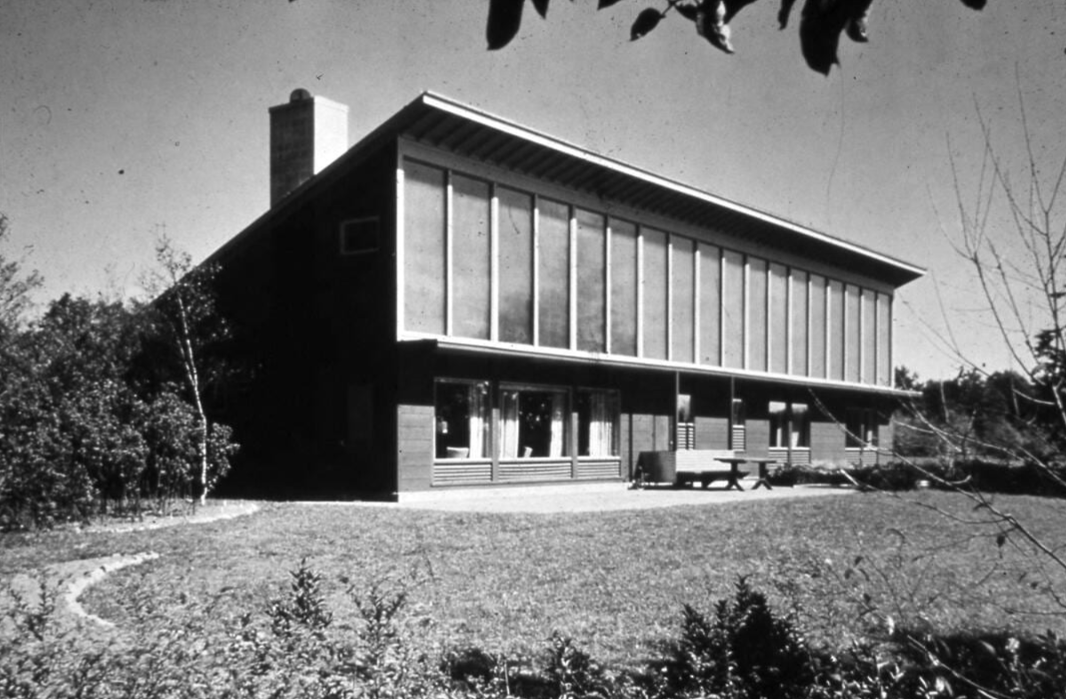
Forty years before ubiquitous rooftop photovoltaic systems, the Dover Sun House in Dover, Massachusetts, demonstrated the potential of thermal energy storage. The two-bedroom residence, completed in 1948, relied on passive solar harvesting rather than electricity generation. Architect Eleanor Raymond and chemist Mária Telkes designed the heating system, with Amelia Peabody covering the construction costs.
The architecture oriented 18 windows on the south-facing upper wall. Behind these glass openings, metal and glass panels intercepted solar radiation. The collected heat was actively managed by fans that circulated it through ducts into modules of thermal storage. Telkes selected Glauber’s salt, a crystalline form of sodium sulfate, for this purpose. This substance functions as a phase-change material. When heated, it melts at approximately 90 degrees Fahrenheit and absorbs energy. As the material cools during the night, it recrystallizes and releases thermal energy back into the living spaces. MIT Technology Review noted during the project’s planning that Glauber’s salt offered approximately seven times the heat storage efficiency of water.
Telkes was a researcher at the Massachusetts Institute of Technology and part of its Solar Energy Conversion Project. A doctorate holder in physical chemistry, she had previously worked on heat-to-electricity conversion devices at Westinghouse. The house, appearing as a wedge-shaped structure, drew attention at a 1950 MIT symposium.
The system faced failure due to material constraints. The sodium sulfate proved corrosive, causing leaks in storage containers by 1954. Additionally, the dense solidifying salt settled at the bottom of the containers without turbulence. If it settled, the crystallized material could not release the stored heat. These factors led the residents to abandon solar heating for conventional methods.
Telkes did not let the setback halt her research. She earned seven patents for heating, cooling, and heat storage methods. Beyond residential applications, she developed a solar still for military emergency kits during World War II. This device was later scaled up to provide fresh water in the Virgin Islands. The Dover experiment remains a historical reference point for the challenges of solar thermal storage.
Sources and further reading
See an error? Read our corrections policy or email [email protected].