Whoop Humans turns wearable data into a fitness social feed
Whoop has launched a social network where members share sleep, recovery, strain and activity data pulled straight from their wearables. It is live now in the company's app.

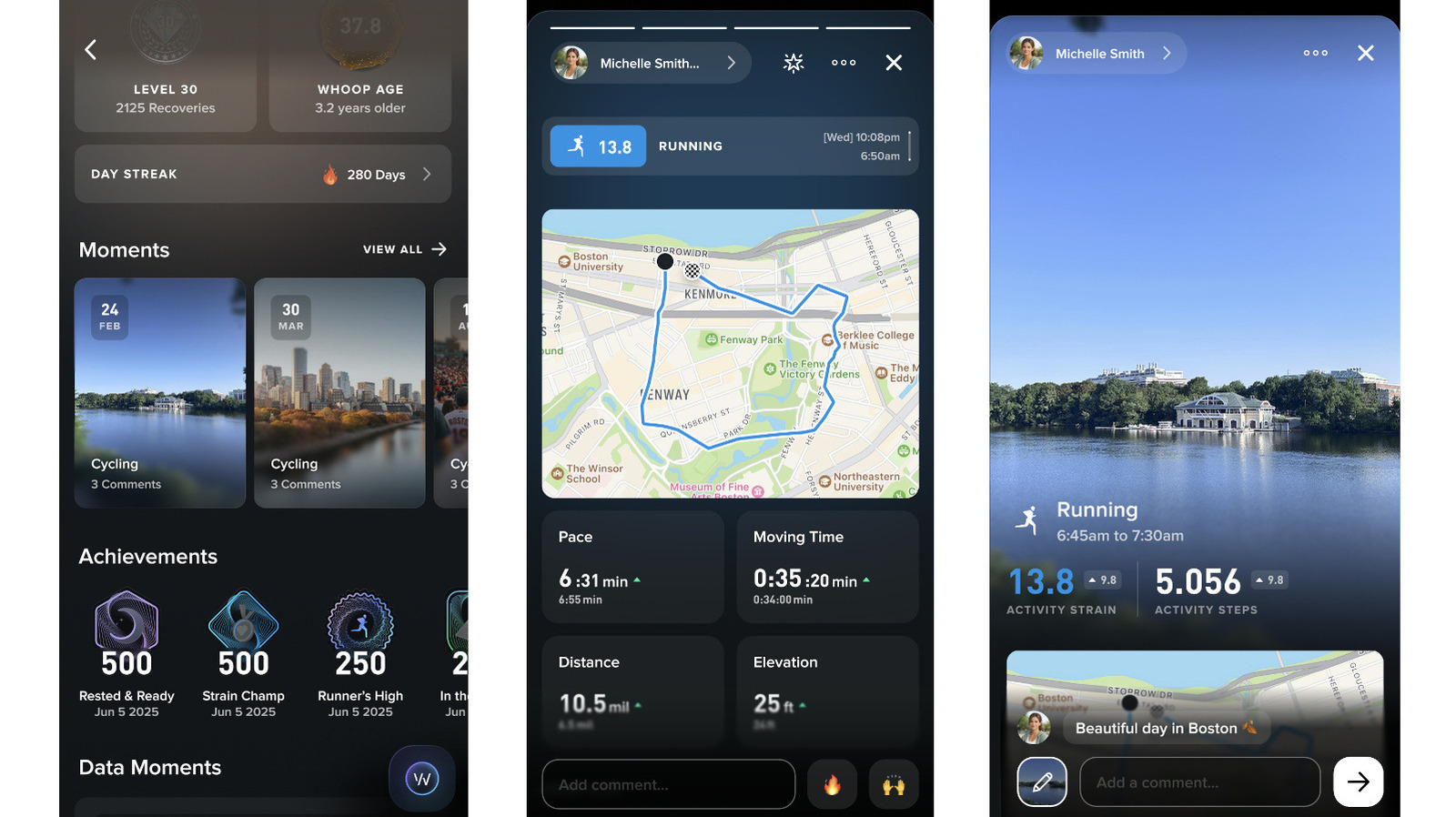
Whoop has introduced Whoop Humans, a social network built around data from its screenless fitness trackers, Engadget reports. The feature is live now and available inside the company's app.
According to the reporting, members can post information covering sleep, recovery, strain and activities. Every item shared originates from a Whoop wearable. The company frames that restriction as an authenticity safeguard: the updates are real-world readings rather than text posts that could be produced from scratch. In its announcement, Whoop positioned the network against what it described as a growing volume of artificial content on conventional social platforms. CEO Will Ahmed called it, in the company's phrasing, the "most verifiably human network ever launched."
How it differs from existing features
Whoop already offers Teams, which groups users together and ranks them on leaderboards. Whoop Humans shifts the structure toward direct following. Members can follow friends and family and then comment on or react to what those people post. The stated aim is mutual check-ins: congratulating someone on a goal, or suggesting a friend ease off when their recovery reading is low.
A separate feature called Moments lets members share photos taken during workouts. Whoop says those photos can be kept private.
Controls and privacy
Sharing is opt-in rather than automatic. The reporting states that wearing a Whoop does not mean data is published to the network by default. Members choose which workout types and achievements appear, and they can change their sharing preferences at any time. Moments can also be hidden.
What to make of it
On the confirmed side: the product exists, it lives in the Whoop app, it draws only on wearable data, and it ships with granular sharing controls. Those controls matter, because fitness metrics can reveal sleep patterns, illness and training load — details many people would not want visible to a broad audience by default.
The company's argument that wearable-sourced posts are harder to fake is plausible on its face but is a marketing claim, not something independently tested here. Data can be genuine while the accompanying context remains selective, and a feed built on one vendor's devices is a closed ecosystem by design rather than a neutral record.
Engadget's own assessment is notably tempered. The publication notes that broad interest in another person's fitness metrics is hard to picture, while allowing that dedicated fitness users may find value in it. That is a fair summary of the addressable audience: Whoop's existing, already-engaged subscriber base rather than a mass-market social audience.
The practical question for current members is whether following individuals adds enough over Teams' groups and leaderboards to justify another feed to maintain. The answer will likely depend on how many people they know are already on the platform, and on whether the recovery-based nudging Whoop describes feels supportive or intrusive in practice.
The launch also raises a familiar tension for a company selling subscriptions to a data-driven service: more social sharing can deepen engagement, but it also broadens the surface where sensitive health-adjacent information could be exposed through user error or changing defaults. Whoop's stated preference controls are the main mitigation offered so far.
Whoop Humans is available now through the Whoop app.
Sources and further reading
See an error? Read our corrections policy or email [email protected].