Bill Gates Urges Mandatory AI Safeguards, Flags Bad Actors as Top Threat
Bill Gates tells NBC News that requiring safeguards and monitoring for every AI system is essential, warning that malicious use of AI tools poses the most immediate danger.

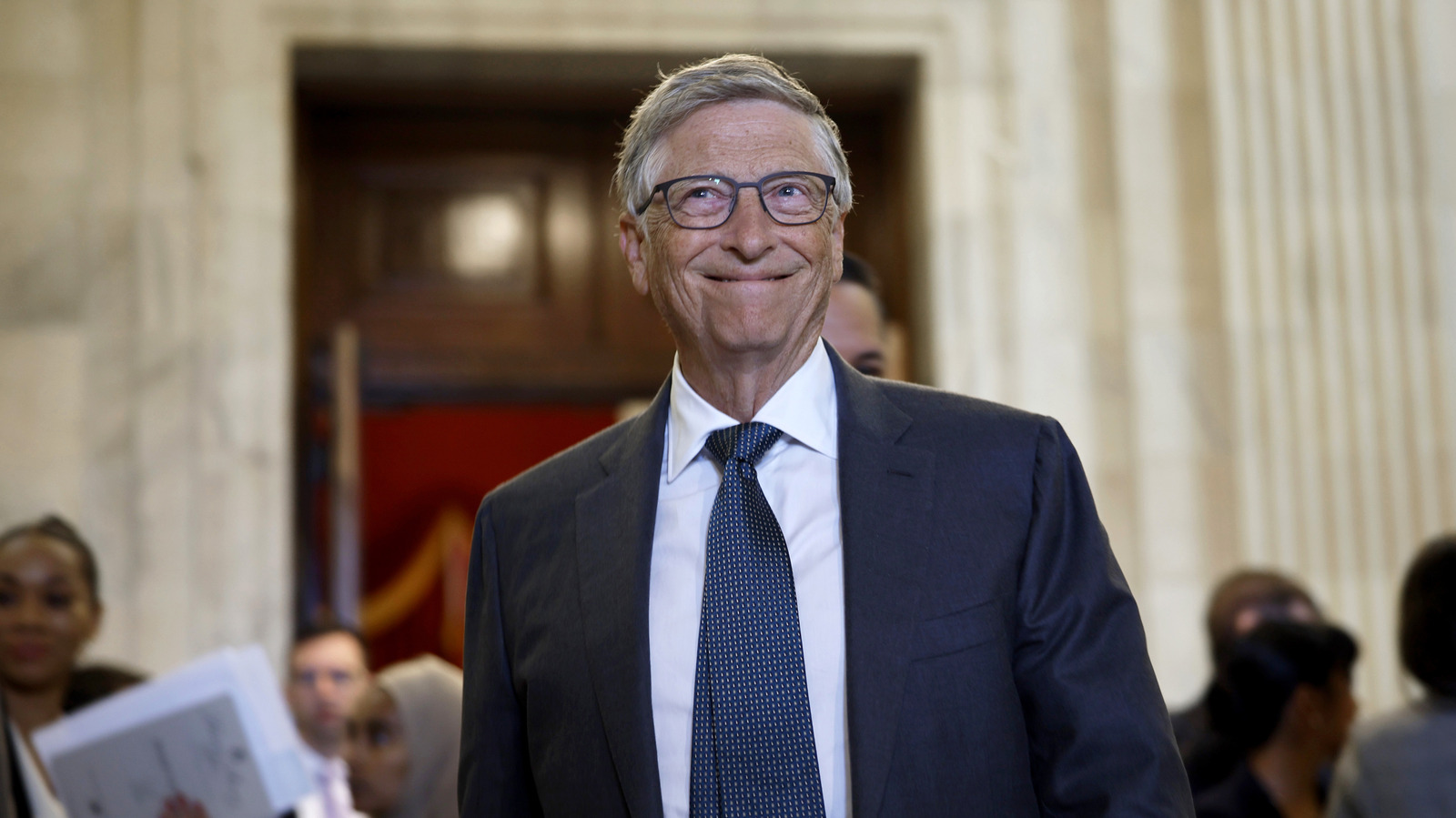
Bill Gates has backed calls for stronger AI regulation, telling NBC News' Meet the Press that requiring safeguards and monitoring on every AI system is a necessity, according to Engadget. The Microsoft co-founder described the absence of such requirements as "completely irresponsible," framing mandatory protections as a baseline expectation rather than an optional add-on.
Gates' remarks arrive as several leaders of major AI companies have voiced support for slowing the pace of development, Engadget notes. The convergence is notable: industry figures who compete on capability are publicly aligning around the idea that deployment should come with oversight. Whether that alignment translates into binding rules remains an open question.
A key part of Gates' argument is about where the danger actually sits. While California Governor Gavin Newsom has floated a "kill switch" as part of a broader response to rapid AI evolution, Gates said he would not oppose such a mechanism but argued it does not address the more imminent risk. His concern centers on bad actors who gain access to powerful AI tools, which he said could enable bioterrorism or large-scale financial fraud. "The most dangerous thing we're facing right now is people with bad intent using AI," Gates said, adding that he sees no prior weapon as potent as ill-intentioned people armed with the latest AI tools.
That framing pushes the debate beyond model architecture and toward access. If the primary threat is misuse rather than the technology itself, safeguards and monitoring become less about throttling progress and more about tracking who is doing what with the systems. It also implies that a single emergency stop on development would be a partial fix at best, since the capability would still exist in the hands of whoever already has it.
Gates also weighed in on who should set the rules. He supported bringing law enforcement and politicians into the conversation about what safeguards and monitoring AI companies should adopt. He acknowledged that this would add overhead for the industry, but said it would not cause what he described as a dramatic slowdown of their work. That is a notable position from a figure with deep ties to the sector: regulation is acceptable, in his view, as long as it is targeted and does not stall development outright.
The interview also comes amid movement on the evaluation front. Engadget reports that Anthropic recently engaged Accenture to act as a third-party evaluator for its latest AI models. Third-party evaluation is one mechanism that could give monitoring requirements teeth, since it places assessment outside the company that built the system. It is one data point, not a sector-wide standard.
Taken together, the comments sketch a preference for layered safeguards over a single dramatic intervention. Gates' emphasis on malicious use suggests monitoring, access controls, and outside evaluation may matter more in the near term than a kill switch. But the interview offers no specifics on what those safeguards should look like, how they would be enforced, or who would pay for them. Legislation he supports is described only in broad terms. The gap between agreeing that safeguards are needed and defining them remains wide.
What is clear from the exchange is that the terms of the AI safety conversation are shifting. The question is no longer whether safeguards should exist, but which ones, applied to whom, and with what authority. Gates' answer leans toward mandatory coverage and outside scrutiny, with the caveat that industry should not be brought to a halt. Engadget's reporting captures the positions; the policy details are still to be written.
Sources and further reading
See an error? Read our corrections policy or email [email protected].