Godox C100 review roundup: a striking transparent-screen camera with a framing problem
TechRadar's hands-on verdict on the Godox C100: a pocketable, sci-fi-looking point-and-shoot whose transparent viewfinder is hard to frame with, paired with modest image quality and a light meter that genuinely works.
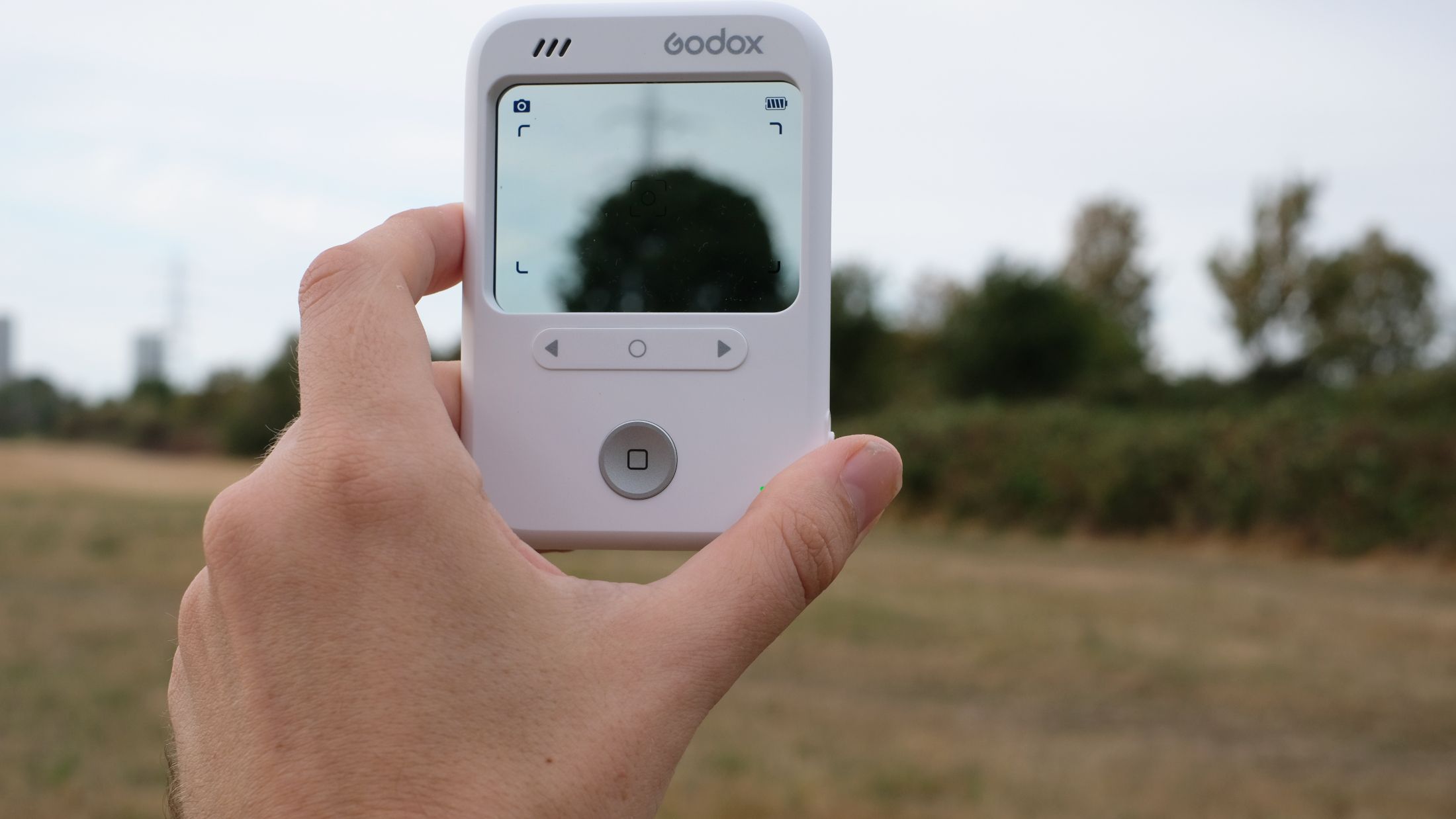
What the Godox C100 actually is
TechRadar's Jon Stapley describes the Godox C100 as a slim, rectangular point-and-shoot built around a transparent plastic panel that serves as both screen and viewfinder — and doubles as a light meter for film photographers. In a body barely larger than a playing card, that panel overlays mode information, battery level and framing lines once the camera is switched on.
The design was the draw. Stapley reports that friends and strangers complimented the camera during testing, with comparisons to Star Trek hardware coming up repeatedly, and he credits it as genuinely pocketable.
Framing is the core complaint
According to the review, the concept does not survive contact with actual shooting. Stapley writes that there is no comfortable way to hold the camera while keeping both the subject and the frame lines in view, describing his eyes flicking between the two. He also found that unless the camera is held very close to the face, the framing lines do not correspond well to what is captured — he admits to holding the screen up to his eye at times.
Controls are deliberately minimal. The panel is not touch-sensitive, which the reviewer treats as sensible to avoid smudges. A side switch toggles between photo, video and light meter modes, and a row of buttons below the screen changes aspect ratio or adjusts light meter parameters. Stapley characterises it as a point-and-shoot with effectively no camera settings control.
Image quality: okay for its class, with caveats
Stapley's assessment of stills is mixed rather than damning. With a 2MP sensor and a fixed-focus plastic lens, he says the C100 was never going to produce spectacular images. He found colours punchier than expected and detail basically acceptable, though it smudges when the subject is distant or inspected closely. Dynamic range, he writes, is poor — bright sunlight blows out highlights and shadows turn murky. He also argues that built-in filters or film-style looks, as seen on rival budget compacts, could have given the output more character; he describes the results as boring relative to the camera's exterior.
Video fares worse in his testing. Short walking clips produced jittery footage with no stabilisation, pronounced rolling-shutter wobble and some dropped frames.
The light meter is the part that works
Stapley tested the C100's light meter against a TTArtisan Light Meter II and reports that the recommended settings lined up. The limitation is mounting: the TTArtisan has a cold shoe for attaching to an SLR, and the Godox does not. In his view that restricts the C100's meter to tripod-based work, since juggling it alongside a film camera one-handed is not realistic.
Price, positioning and the reviewer's verdict
At $45 / £47 (roughly AU$64), Stapley notes the C100 undercuts most cheap compact cameras, including the Camp Snap, and most dedicated light meters he can think of, and he says discounts on the launch price have already appeared.
He is nonetheless unsure who the camera is for. He sketches one possible scenario: using it as a light meter plus a quick reference shot of a scene later captured on film, similar to how photographers once used Polaroids. He does not consider that a compelling case for himself.
Interpretation
This is a single reviewer's hands-on assessment, not a lab-tested verdict, and the judgements about framing comfort, image character and usefulness are subjective. The confirmed factual points are the specifications, price, control layout and absence of a hot shoe; the conclusions about daily usability and target buyer are the reviewer's opinion.
For buyers, the review suggests the C100 makes sense for those prioritising pocketability, novelty or an inexpensive film light meter, and does not make sense for anyone chasing image or video quality.