Apple TV’s latest adaptation of Cape Fear trades the 1991 film’s simmering dread for a distinctly 21st-century paranoia, one where smartphones, smart homes, and AI become instruments of terror. The 10-episode season, executive produced by Martin Scorsese and Steven Spielberg, reimagines the cat-and-mouse game between ex-con Max Cady (Javier Bardem) and the Bowden family, with technology woven so deeply into the plot that it becomes a character of its own.
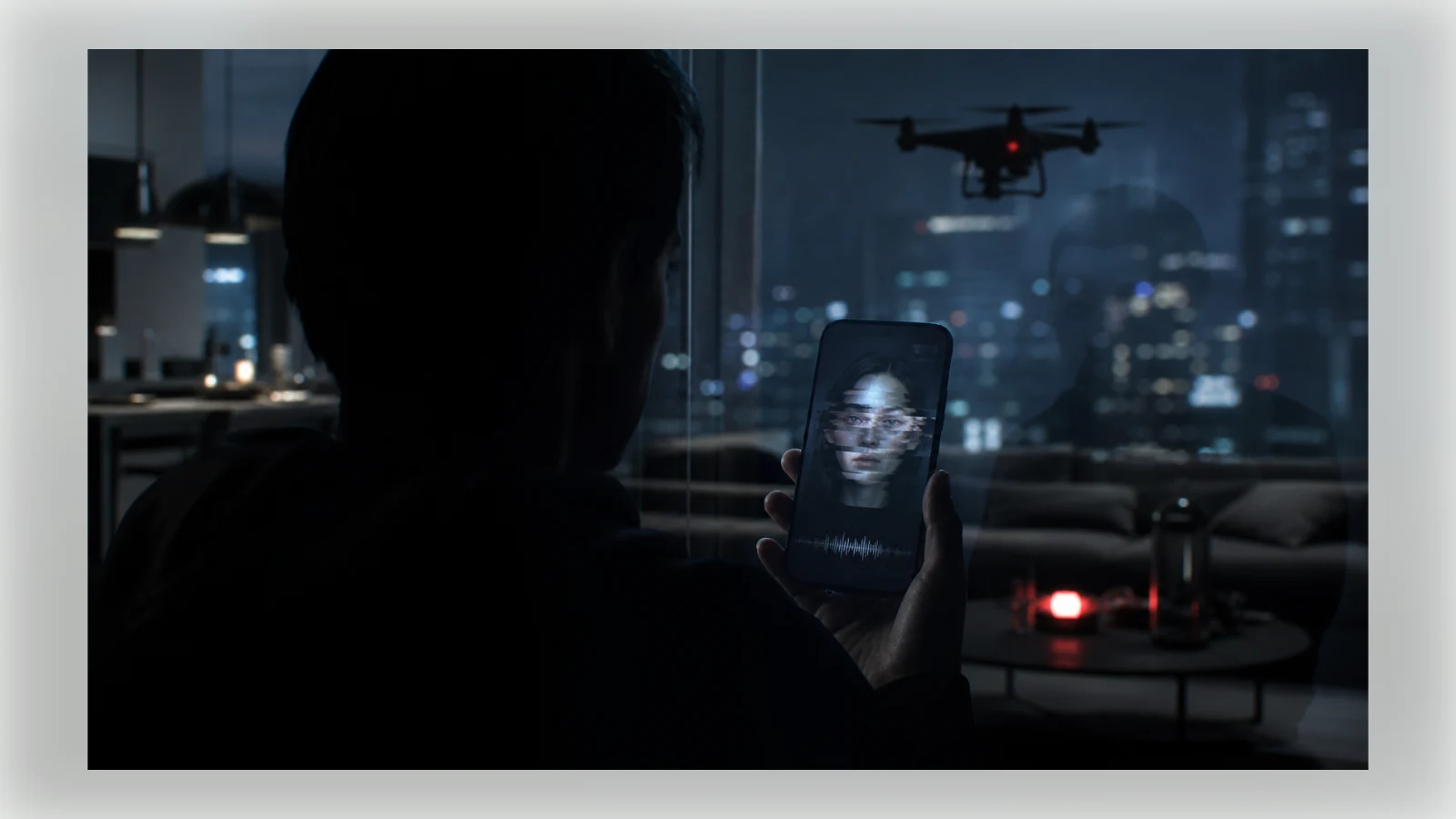
Cady’s campaign of psychological warfare begins with analog cruelty—dead skunks dumped in a pool—but quickly escalates into digital manipulation. He and his accomplices catfish Anna Bowden’s teenage son Zack through text messages and in-game chats within a World of Warcraft-style online game. The scheme exploits the boy’s trust in online personas, a reminder of how easily virtual connections can turn predatory. Meanwhile, drones hover ominously over the Bowden property, capturing private moments like daughter Lily doing yoga; that footage is later leaked, weaponizing shame and isolation.
Home security systems, meant to provide safety, become another vulnerability. Cameras glitch at critical moments, erasing evidence of Cady’s intrusions just when the family needs proof most. The show leans into the unsettling reality that the devices we install for protection can be turned against us. Even Tom Bowden’s professional life is sabotaged by what appears to be an AI voice clone, landing him in trouble at work with a fabrication indistinguishable from the real thing.
These tech-enabled torments are not mere set dressing. Showrunners use them to amplify the core theme: in a world mediated by screens, truth becomes slippery. As Cady tightens his grip, both the Bowdens and the audience are left questioning every notification, every recording, every familiar voice. The finale hammers this home with a cascade of digital evidence—a hidden USB drive of photos, a secret recording on a stolen iPhone, and a screen-recorded FaceTime call—that simultaneously resolve and complicate the mystery.
The series arrives amid a cultural moment of growing skepticism toward AI, deepfakes, and surveillance. By rooting its horror in everyday tools, Cape Fear taps into a collective anxiety that what we see and hear may no longer be reliable. Javier Bardem’s portrayal of Cady, radiating chaotic menace even while eating an ice cream cone, anchors the tech-driven narrative in raw human threat. It’s that fusion of old-school predator and new-school toolkit that makes this remake feel less like a throwback and more like a warning.
See an error? Read our corrections policy or email [email protected].