Philippine firms trail global AI maturity by about two years, BCG-MBC study finds
A BCG and Makati Business Club report says 60% of surveyed large Philippine companies remain in early AI stages, and none have reached the top tier, even as many aim for that status by 2029.

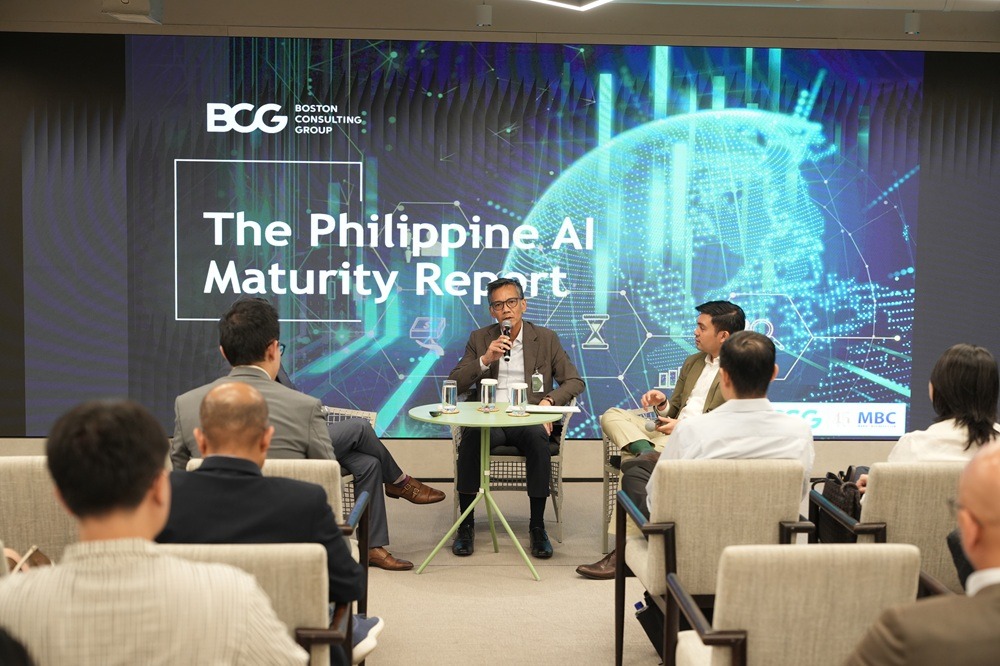
Large Philippine companies trail the global average in AI maturity by roughly two years, according to a study by Boston Consulting Group and the Makati Business Club. The Philippine AI Maturity Report, released Nov. 11, surveyed 35 large companies across 12 industries and compared them with BCG's 2026 global Applied AI Index, which covered more than 1,330 organizations in over 60 countries.
The gap is about maturity, not simply spending. The report says 60% of surveyed firms sit in the Stagnating or Emerging stages and none have reached Future-built. The country's 2026 average is closer to the 2024 global average than to current international levels. Yet 54% expect to reach Future-built by 2029, a target the authors say would require 2.5 times the recent pace of improvement seen in the global average.
Foundations outpace outcomes. Technology, data, people and operating model average 46, against 37 for business outcomes across innovation, customer experience and operations. Customer-facing applications rank among the least mature areas, including agentic AI, AI-powered pricing, marketing personalization and customer journey management.
The report also found a sharp divide between leaders and laggards. The top 10 companies outscored the bottom 10 in every capability area, with the widest margins in operating model at 46 points, people at 40 and technology at 38. Eighty percent of leading firms report live AI deployments in IT and data workflows, against 20% of the lowest performers. Higher-maturity companies direct 13.4% of IT budgets to AI; less mature ones direct 7.7%.
Total technology spending does not appear to be the main constraint. Philippine firms spend 3.1% of revenue on foundational IT, versus 2.6% globally and 3.7% among Southeast Asian peers. The findings link maturity differences more closely to how firms organize operations and steer technology investment than to overall outlay.
Three obstacles stand out: outdated technology systems, shortages of skilled workers, and AI costs that are high relative to local labor. Seventy-four percent of enterprises have moved all or most IT infrastructure to the cloud, yet 49% still cite legacy systems as a major barrier to digital transformation. Job postings requiring AI skills rose more than sixfold between 2021 and 2025, but only 17% of organizations say they can recruit and retain enough people with that expertise. The report also notes that Philippine businesses pay prices for AI technology comparable to global markets while operating in an economy with much lower labor costs.
BCG and MBC warn that slow progress could matter for industries built on labor-cost competitiveness, particularly IT-BPM. Remittances and IT-BPM export revenues together account for roughly 17% of Philippine GDP. The report sets out two paths: AI automating tasks now done by Filipino workers and eroding the cost advantage, or augmenting workers so firms can compete on higher-value services. On the survey evidence, it places Philippine companies closer to the first.
Recommended steps include multiyear AI strategies tied to specific business outcomes, workforce training, stronger technology and data infrastructure, and tracking returns on AI investment. The report also calls for government-business coordination on fragmented data systems, advanced AI talent, and the cost of deploying AI at scale. BCG says that, in its experience, 70% of AI value comes from changes to people, organizational structures and processes rather than technology alone.
Sources and further reading
See an error? Read our corrections policy or email [email protected].
Continue reading

Microsoft says Outlook access is recovering across Asia-Pacific, but email delays persist

Infinix XPAD 30 to Launch in the Philippines on November 11 with AI Learning Features