SpaceX catches Starship upper stage after orbital flight, booster misses pad
SpaceX retrieved its Starship spacecraft at the launch tower after a 22-hour flight, while a booster failure left debris in the Gulf and engineers investigate the cause.

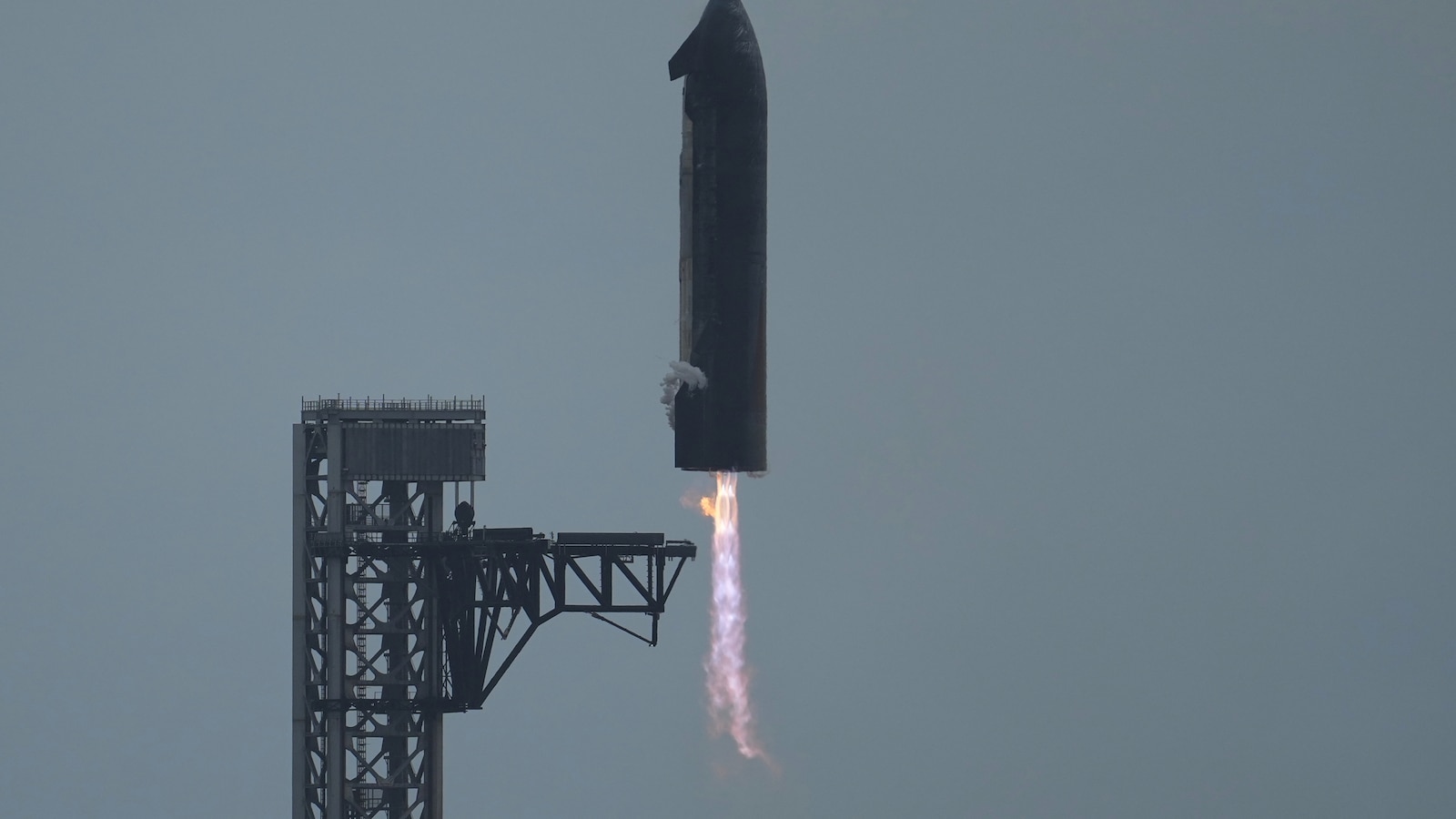
SpaceX completed a first on Saturday: its Starship upper stage returned from space and was caught by the mechanical arms of its launch tower, according to The Associated Press. The spacecraft had lifted off about 22 hours earlier from SpaceX's site near the U.S.-Mexico border in Texas. The catch is the first time a Starship returning from space has been recovered this way, AP reported.
The mission was not a clean sweep. The first-stage booster exploded shortly after Friday's launch, so SpaceX missed the double recovery it had sought. Debris remained in the Gulf of Mexico, marked off by buoys, AP reported. SpaceX's Kate Tice said the booster's engines cut off early during descent; the guidance system concluded the vehicle was out of position and triggered a diversion into the water and self-destruction. Engineers are still looking into why.
During the flight, the upper stage separated from the booster, entered orbit and deployed 26 Starlink satellites, according to the report. It circled Earth at about 165 miles (265 kilometers), completing 14 laps—more than the one or two laps of the prior mission. SpaceX said the spacecraft, including its heat shield, appeared to perform well. The company described the flight as its 15th full-scale Starship flight since 2023 and only its second orbital trip.
SpaceX framed the tower catch as evidence that Starship can be fully reused, a goal for missions to the moon and Mars. That is a company claim about the system's promise, not an independent assessment. The booster technique had already worked three times before, according to the report, which gives SpaceX a separate recovery method to build on even after Friday's failure.
The stakes extend beyond SpaceX. NASA is paying billions for Starship to carry Artemis astronauts to the lunar surface later this decade and to support a permanent lunar base. NASA Administrator Jared Isaacman welcomed the result on X, saying it was nearly magical and brought the agency closer to its moon goals, according to AP. Musk's longer-range ambition, as described in the report, is a fleet of Starships bound for a Mars city.
For users of SpaceX's satellite broadband, the flight offered a practical data point: the upper stage released another batch of Starlink craft. For competitors, the message is mixed. The catch supports SpaceX's reusability argument, but the booster loss shows that recovery remains failure-prone. Blue Origin, which is also working on a lunar lander, is named in the report as a partner in NASA's alternating crew-delivery plan. The agency expects Artemis III astronauts to practice docking with both SpaceX's Starship and Blue Origin's Blue Moon in Earth orbit; NASA is targeting as soon as 2028 for Artemis IV, the first crewed lunar landing since Apollo.
SpaceX expects to start launching Starships from Florida's Kennedy Space Center within a few months, AP reported. That site is the departure point for NASA's next Artemis mission. The near-term test will be whether SpaceX can turn a dramatic recovery into routine operations—and whether the booster anomaly is isolated or a sign of deeper trouble. Until engineers report their findings, the cause remains unresolved.
Sources and further reading
See an error? Read our corrections policy or email [email protected].


