The Bipolar AI Divide: Global Autonomy Dims as Washington and Beijing Consolidate Power
As the United States secures 72% of new AI computing capacity and China dominates energy use, a report in TIME Technology warns that the global majority is losing influence over technology governance and cultural preservation.

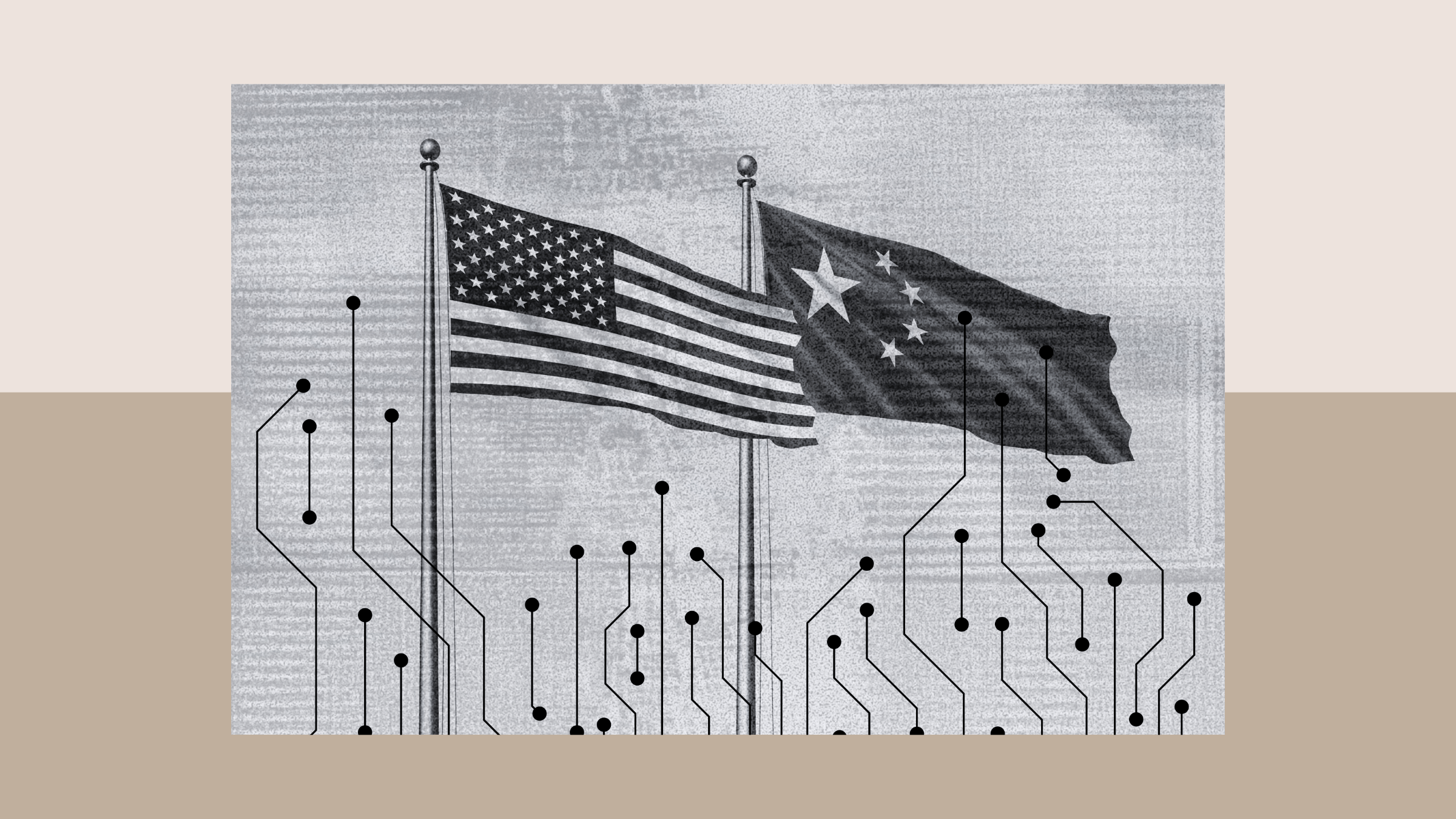
Artificial intelligence is fast moving toward a 'bipolar' reality, dominated by the United States and China. Data from Epoch AI indicates that between 2022 and the first half of 2026, the U.S. garnered roughly 72% of the world’s new AI computing capacity, while China secured 10%. This disparity extends beyond hardware; the International Energy Agency notes that U.S. and Chinese data centers utilized about 70% of global electricity in 2024, a figure mirrored by the concentration of AI research, as three-quarters of NeurIPS 2025 publications involved U.S. or Chinese institutional affiliations.
This geographic concentration leaves the rest of the world vulnerable to the governance of distant powers. Frontier models rely overwhelmingly on English web data, potentially leading to cultural homogenization and a loss of nuance in languages like Hindi or Quechua. Economically, a 'language tax' exists, where processing the same content in under-resourced languages costs more in tokens than in English. Furthermore, national security concerns are currently reshaping technology access; in June, the U.S. government directed Anthropic to restrict access to its Fable 5 and Mythos 5 models for foreign nationals, demonstrating how single-national decisions can disrupt global service availability.
In response, nations including India, Canada, and the UAE are investing in 'sovereign' models to regain control over cultural and linguistic representation. These initiatives aim to embed local contexts into algorithms. However, the analysis highlights significant limitations: many of these models are adapted from U.S. or Chinese provenance and often inherit structural biases. They also suffer from a lack of standardized evaluation standards that assess safety and nuance within specific local contexts, such as the operational realities of South Asian infrastructure. Consequently, countries relying on these models risk falling behind in critical sectors like defense and medicine if their capabilities cannot match frontier models.
To avoid becoming dependent on the factions of Washington or Beijing, middle powers are urged to form coalitions. This would involve pooling public resources for shared regional infrastructure and developing common evaluation benchmarks rather than attempting to build frontier models in isolation. The analysis suggests that by prioritizing smaller, context-aware models for regional needs and leveraging international bodies like the Global Partnership on Artificial Intelligence (GPAI), the global majority can secure a meaningful voice in AI governance, ensuring technology serves diverse human experiences rather than imposing a single cultural framework.
Sources and further reading
See an error? Read our corrections policy or email [email protected].


