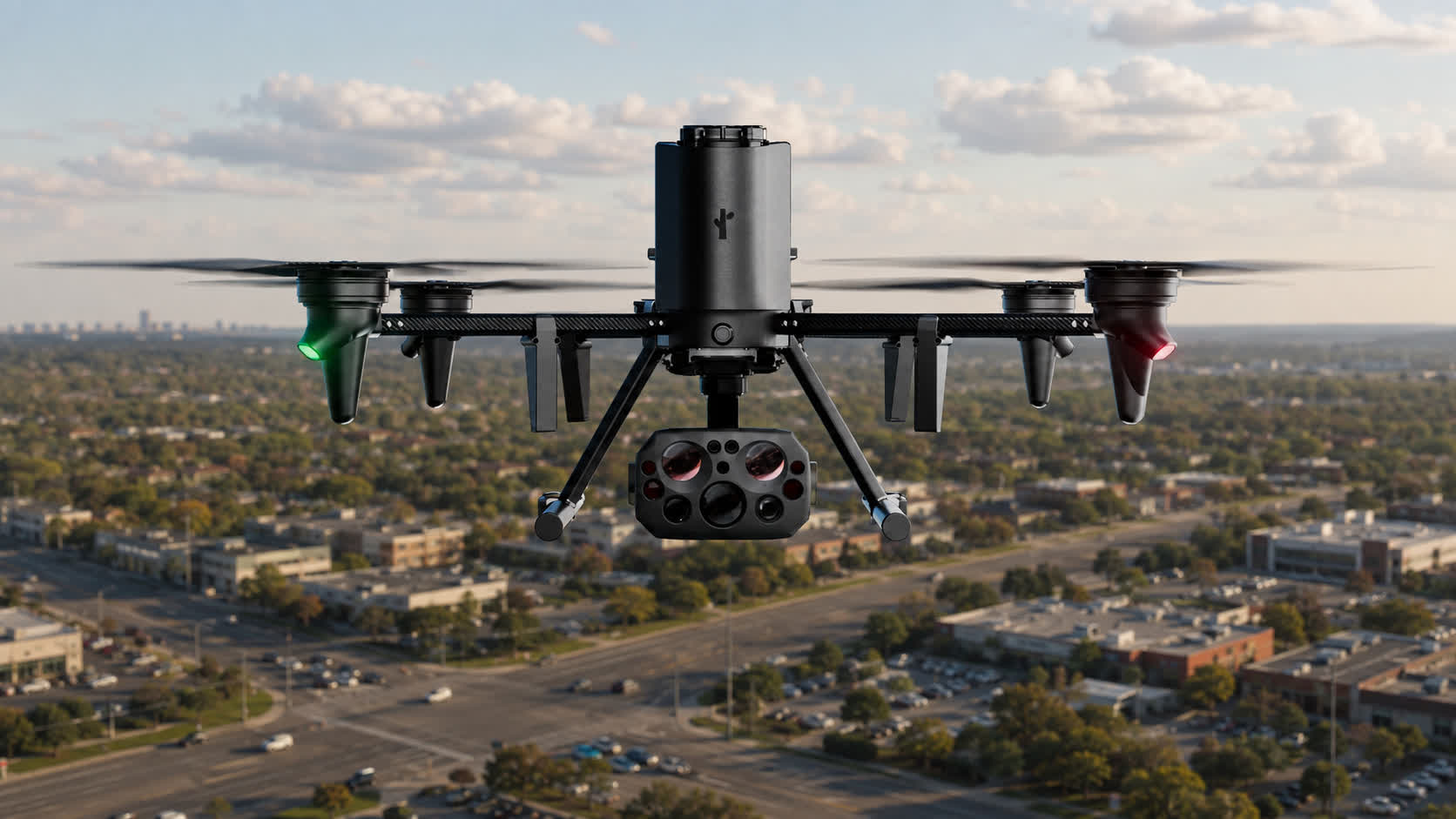
Flock Safety, widely known for roadside license plate cameras now operating in more than 6,000 US communities, is betting on a different kind of surveillance: police drones. The company's Drone as First Responder (DFR) program is its fastest-growing segment, according to a Flock spokesperson.
The DFR system keeps drones in climate-controlled rooftop docks, typically on police precincts or fire departments. When a 911 call comes in, a drone can be dispatched before officers arrive. Flock says the aircraft can fly at up to 400 feet and 60 mph, with a 40x optical zoom to inspect scenes from a distance. The company claims an average arrival time of 86 seconds and says the system resolves about 20 percent of calls without sending an officer. More than 200 police departments and private companies have adopted the technology, and production of Flock's US-designed drones is expanding at a Georgia facility.
CEO Garrett Langley discussed the technology on the All-In podcast. He described an incident in the Dallas-Fort Worth area where a woman at a gas station called 911 after seeing a man pacing with what she believed was a gun. The drone arrived in under a minute and revealed the object was a lighter. Langley argued that in a typical response, an officer would have rushed to the scene and 'someone's about to die,' whereas the drone allowed a safer outcome. Flock presents this as evidence that drone-first responses can de-escalate dangerous situations and prevent unnecessary police deployments. Separately, Dearborn, Michigan has been reported to use a similar Skydio system reaching incidents in about 2.5 minutes.
The rapid expansion of DFR programs is drawing criticism. As of February, more than 1,000 public safety agencies had received FAA waivers needed to automate drone operations. The Electronic Frontier Foundation warns that drones can observe people through windows, in backyards, and on roofs without their knowledge. Flock added license plate-reading capabilities to its drones last year, creating what amount to flying versions of its controversial roadside cameras. The Flock Alpha drone can read license plates from up to 2,000 feet away.
Flock says DFR flights are activated only by calls for service and that every flight is logged, auditable, and displayed on a public transparency dashboard. Langley said most customers publish audit logs and flight patterns, though publication may be delayed for active investigations. He acknowledged that oversight is limited, saying there is 'very little state regulation' and 'zero federal regulation outside of air safety.'
These concerns echo existing controversies around Flock's ground-based cameras, which have generated large numbers of false alerts and have allegedly been misused by officers to stalk partners or ex-girlfriends. Moving the same surveillance capabilities into the sky is likely to amplify calls for stronger protections.
See an error? Read our corrections policy or email [email protected].