Human Centricity in AI: Sovereignty and Localized Tools Take Center Stage at 2026 Summit
At the 2026 Social Good Summit in Manila, Leslie Teo argued that technological growth should not dictate human destiny, advocating instead for community-defined benchmarks and open-source tools that preserve cultural diversity.

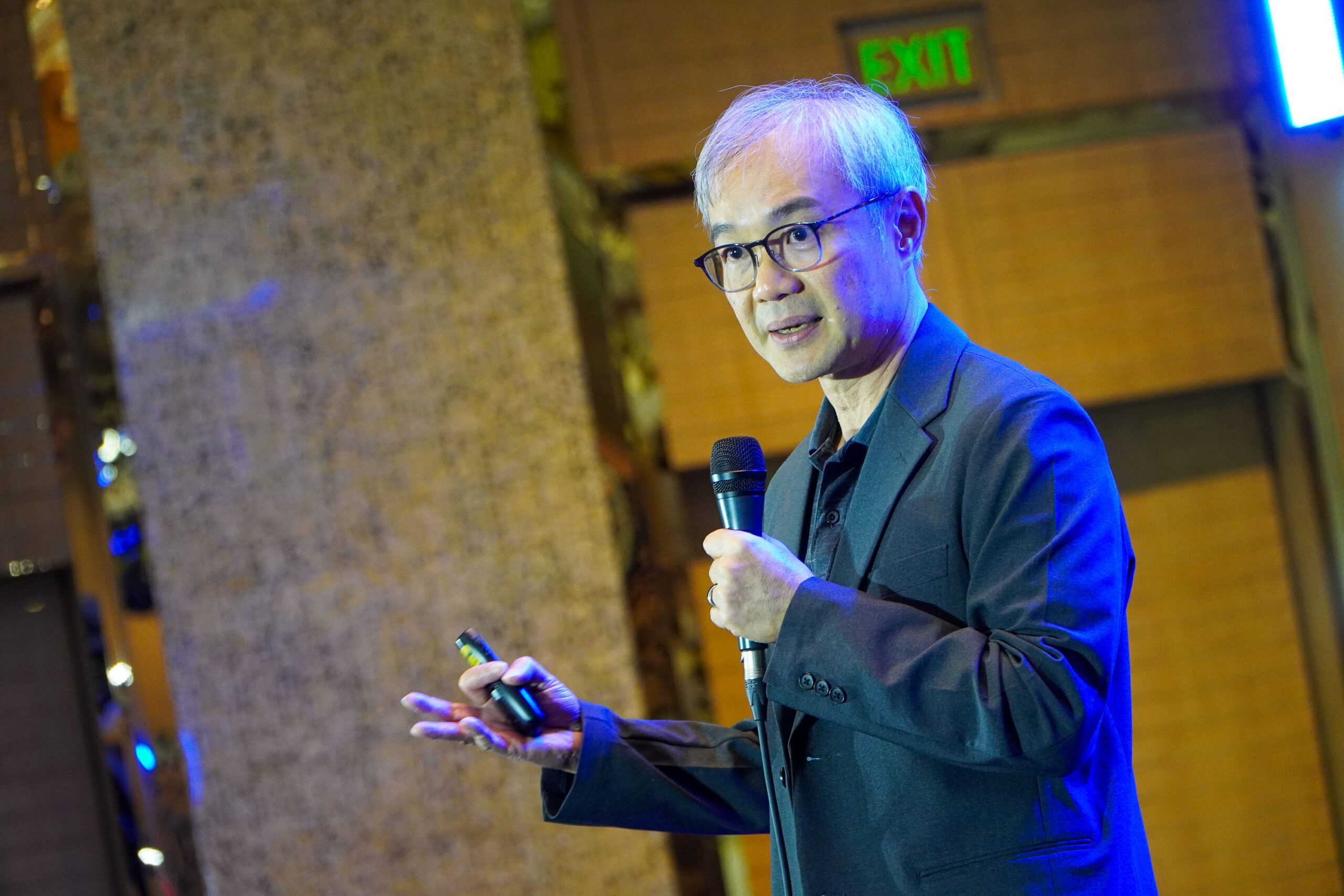
The potential benefits of artificial intelligence are frequently debated through economic metaphors, but a speech at the 2026 Social Good Summit held in BGC, Taguig City, highlighted the risks of that perspective. Leslie Teo, a Singaporean economist and artificial intelligence executive serving on a UN independent scientific panel, argued that technological growth does not equate to equitable progress for all citizens.
Teo utilized the economic analogy of a pie to illustrate this disparity. He posited that the expansion of AI capabilities and industry benefits does not guarantee individual or societal gain. He emphasized that the question of who benefits from these advancements is determined by who has the power to define the future. Without active participation, populations risk being subjects of a future imposed upon them rather than participants in its creation.
A critical area of concern identified by Teo was data representation and localization. He pointed out the vast disparity between linguistic diversity and current model capabilities. While the world contains thousands of languages and Southeast Asia alone is home to 1,300, standard artificial intelligence models are capable of processing roughly 10. Teo questioned the exclusion of the majority of languages and asked who possesses the authority to designate which languages constitute "good" or intelligible AI.
To address this, he advocated for a shift toward open-source technology similar to the history of operating systems like Linux. Teo suggested that relying solely on expensive frontier models is unnecessary. Instead, widespread, free, and open models would allow developers to build tools tailored to their specific cultural and local needs. This accessibility, he argued, is essential for maintaining community sovereignty.
He further warned that developers forfeit control over their tools if they rely on benchmarks established by others. Establishing their own metrics for success, he claimed, is necessary to retain agency over the technology. Teo asserted, "If you give someone else the ability to define what is success, you are giving away your sovereignty."
The practical application of this philosophy can be seen in business environments. He cited call centers as a primary example of human-AI interaction. When technology is deployed to assist human agents by retrieving accurate customer information and validating explanations, it acts as a supportive tool. In contrast, when AI systems are used strictly to monitor productivity and force adherence to a rigid script, they can strip away human autonomy.
Concluding the discussion, Teo reaffirmed the summit's theme of human values. He asserted that the objective is not to maximize the economic pie, but to foster a meaningful world centered on relationships, creativity, and the preservation of human understanding.
Sources and further reading
See an error? Read our corrections policy or email [email protected].
Continue reading
Philippines ranked in top five nations for anti-illicit trade frameworks
Philippines' AI ambitions run well ahead of its foundations, BCG–MBC study finds