Jackery Explorer 2000 v2 Sees $100 Price Cut, and Its 2,042Wh Battery Can Handle More Than Camping Gear
The Jackery Explorer 2000 v2 portable power station is discounted by $100 on Amazon, bringing a 2,042Wh LiFePO4 unit with 2,200W AC output to $899 — a deal TechRadar says could go lower, since it has previously dropped to $743.83.

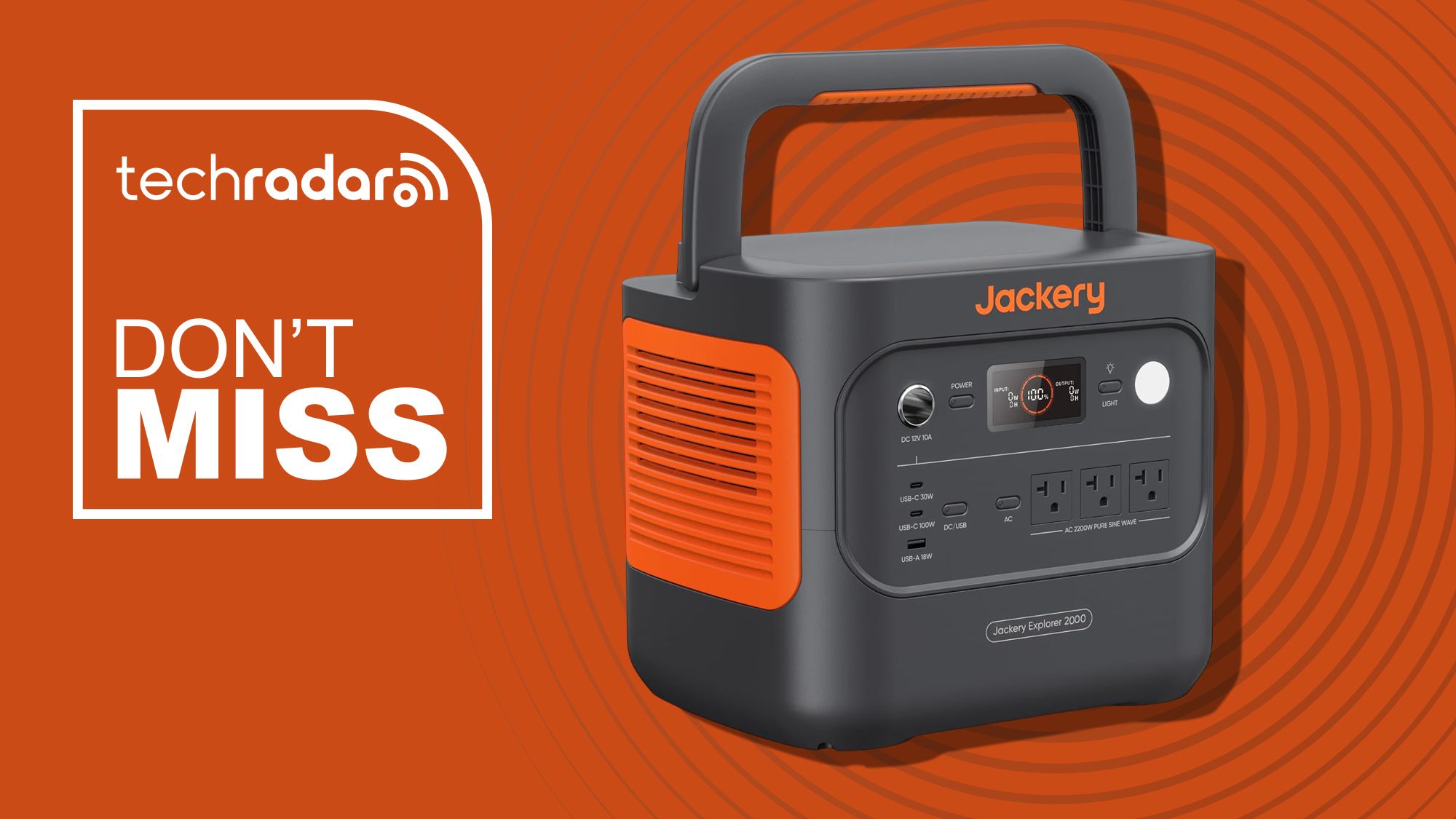
Portable power stations have a habit of looking interchangeable in spec tables: same-size boxes, similar wattage numbers, different logos. The Jackery Explorer 2000 v2 is not the cheapest or the lightest unit in its class, but TechRadar reports it is currently discounted by roughly $100 at Amazon. The publication, which has tested the unit, says the station now sells for $899, down from its $999 list price. UK pricing is listed as £899, reduced from £1,061.
What separates the Explorer 2000 v2 from a small backup battery is the combination of capacity and output. The unit uses a 2,042Wh LiFePO4 battery paired with 2,200W AC output across three outlets. That is enough for a portable station to run demanding appliances rather than merely topping up phones and laptops — a distinction Jackery's own marketing leans on, but TechRadar's hands-on review supports it. Reviewer Owain described the unit as easy to use, simple to transport, and capable of handling everyday needs, awarding it 4.5 stars.
His account of testing the station is unusually specific for a product review. He says he used it while working, running home appliances, and on a camping trip, and that it never approached its capacity limit. That is a single reviewer's experience rather than a lab measurement, but it maps onto the hardware: 2,042Wh is a large reserve, and 2,200W is enough to power many household devices that smaller units cannot start. TechRadar also reports that during power outages, the station kept its testers supplied at a moment when they needed it — the publication's framing, not an independent verification.
Jackery builds the battery using a cell-to-body construction method, which the company says helps keep the unit compact. TechRadar lists the dimensions at 13.2 x 10.4 x 11.5 inches and the weight at 39.5lb. LiFePO4 chemistry is cited for a service life of up to 10 years. The station also includes a 100W USB-C PD connection for fast-charging compatible laptops and phones without their usual adapters, plus solar charging support. A 20ms UPS switching mode is listed, a feature aimed at buyers who want the station to bridge short gaps in mains power.
Price is where the story gets more complicated. The $100 reduction is real but not the lowest figure the unit has seen. TechRadar notes that earlier in the year, Amazon sold the Explorer 2000 v2 for as little as $743.83, and the publication suggests further reductions may arrive around Black Friday. In other words, the current discount is a modest markdown from list — not a floor price. Anyone comparing power stations should treat $899 as a current asking price rather than a signal that the unit has bottomed out.
The more useful question is who should be looking at this class of product at all. The Explorer 2000 v2 makes sense for buyers who need stored power for home backup during outages, camping trips, or RV use, and who want something portable enough to relocate without a cart or a second person. TechRadar's review describes the footprint as manageable for a unit with this capacity. It is not aimed at someone whose actual need is a phone, tablet, and laptop. A smaller station costs considerably less and is far easier to carry, and the 39.5lb weight of the Explorer 2000 v2 is a genuine daily consideration for anyone who moves it often.
TechRadar's coverage stops short of a definitive comparison against rivals at the same price. Its recommendation rests on a positive review, a reported discount, and the underlying specification rather than on testing against competing units. Buyers considering a purchase should weigh the earlier sub-$750 pricing and the possibility of further holiday discounts against the value of buying now.
Sources and further reading
See an error? Read our corrections policy or email [email protected].