Microsoft Unveils New Surface Mouse With Haptic Feedback and AI Button
Almost a decade after the original, Microsoft's second-generation Surface Mouse brings haptic feedback, a customizable Copilot button, and six-month battery life for $79.99.

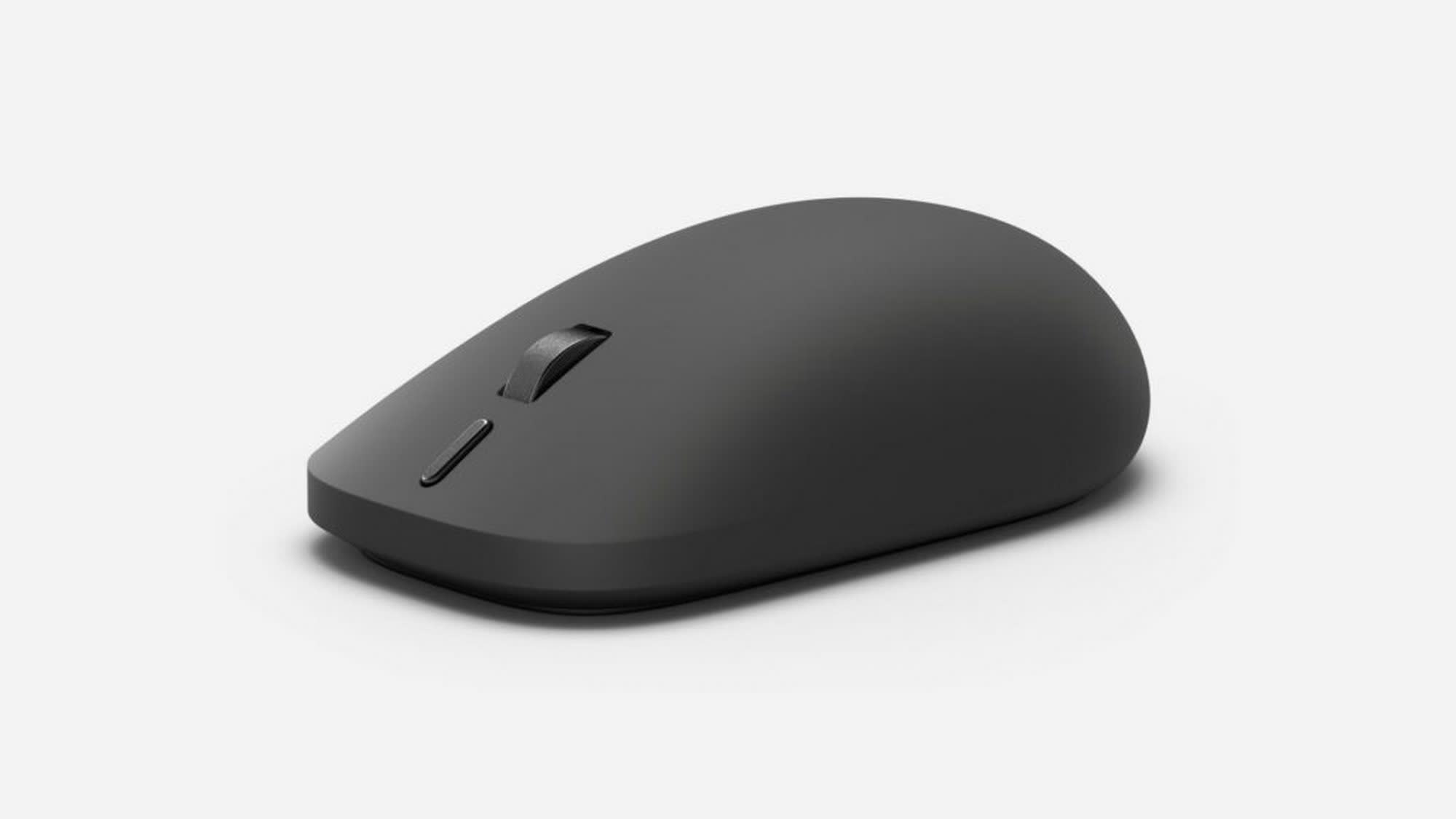
At Qualcomm's Snapdragon Summit in Maui, Hawaii, Microsoft introduced a redesigned Surface Mouse, nearly ten years after the original launched with the Surface Studio in November 2016. The new model, detailed by TechSpot, adds several features aimed at modern workflows.
The most notable addition is haptic feedback, delivered through an internal vibration motor that provides subtle pulses to confirm clicks. According to Microsoft, the haptics can also respond to on-screen actions such as snapping windows to the edge of the display or aligning objects in supported applications, including PowerPoint, Affinity, Concepts, and Filmora.
Another new element is a customizable Action Button. By default it summons Copilot, but users can reconfigure it to launch any app or trigger Windows shortcuts. Customization requires the Microsoft Surface app.
Connectivity has also been updated: the mouse supports Bluetooth 6.0 and can pair with multiple devices simultaneously, letting users switch between them without re-pairing. Microsoft claims the battery lasts up to six months on a single charge.
The design is ambidextrous and ergonomic, intended to suit both left- and right-handed users. Microsoft also highlighted that the mouse contains 30% recycled content, including more recycled plastic than previous models like the 2025 Surface Arc Mouse and the 2018 Surface Precision Mouse.
The new Surface Mouse will be available on October 13 in Black and Platinum, priced at $79.99. That is a significant increase over the original 2016 model's $50 price tag. Microsoft would likely point to the added features, customization, and improved battery life to justify the higher cost.
Alongside the mouse, Microsoft debuted a new Surface Pro and Surface Laptop, starting at $1,149.99 and $1,199, respectively. Both are powered by the Snapdragon X2 Plus SoC, which Microsoft says delivers up to 18% better battery efficiency, over 60% faster graphics performance, and 95% faster on-device AI inference compared to the Snapdragon X Plus.
For everyday users, the haptic feedback and Action Button are the most tangible improvements, potentially streamlining repetitive tasks and reducing reliance on keyboard shortcuts. The multi-device connectivity and long battery life address common pain points for those who juggle multiple computers. However, the $79.99 price puts it in premium territory, and the practical benefit of haptics for on-screen alignment may be limited to specific creative applications. Left-handed users, often underserved by ergonomic mice, may find the ambidextrous shape a welcome change. Those still using the original Surface Mouse or a basic Bluetooth mouse might see enough value in the new features to upgrade, but budget-conscious buyers may hesitate at the price hike.
Attribution: TechSpot reported on the announcement from Qualcomm's Snapdragon Summit.
Sources and further reading
See an error? Read our corrections policy or email [email protected].