New Challenger Krovatar Tests Against the Mainstream King
The 4K Blu-ray player market has consolidated around Panasonic, but a new budget entrant faces stiff performance tests against the established DP-UB820 in a format facing widespread manufacturer exits.

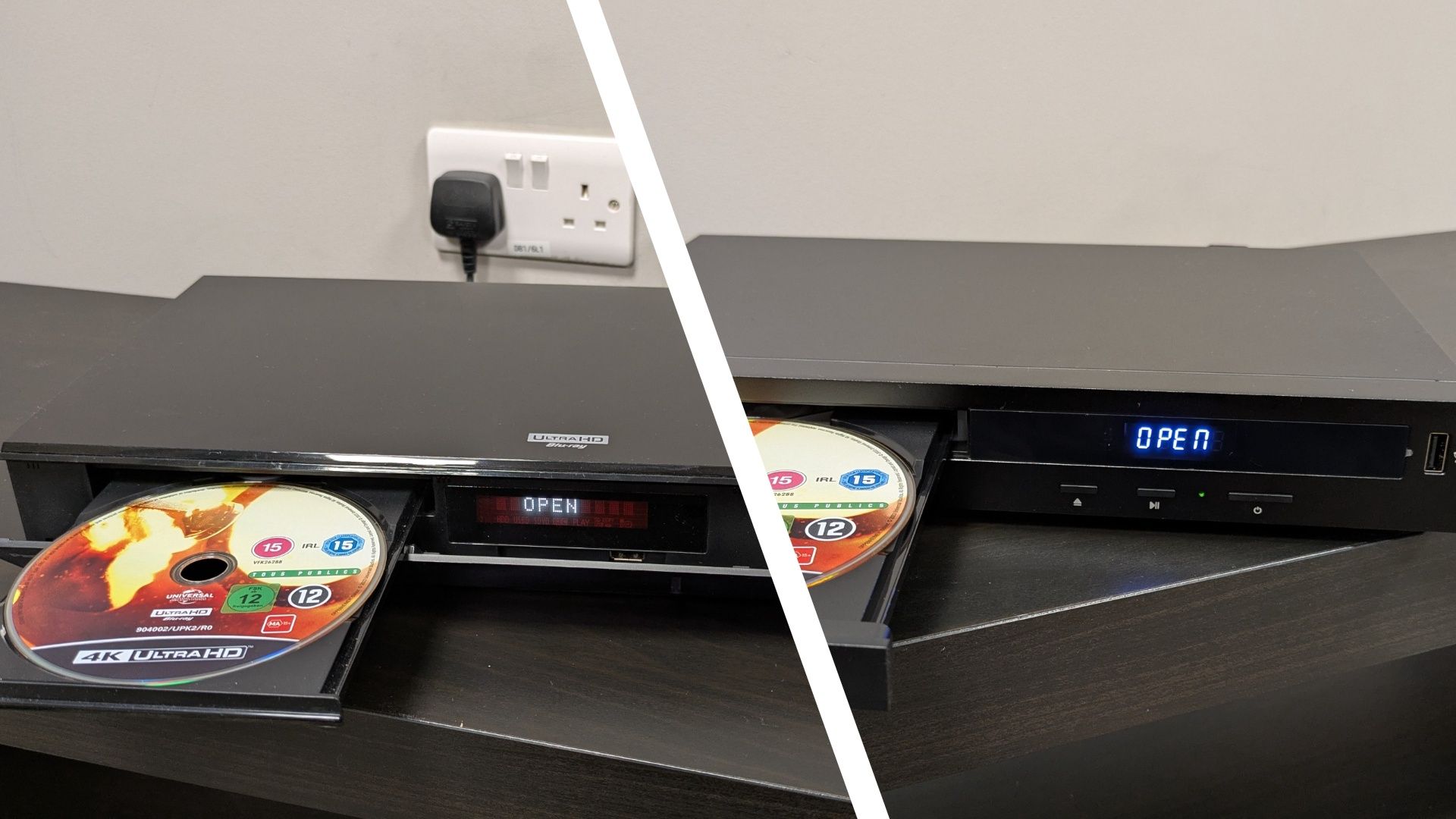
The mainstream 4K Blu-ray player market has recently consolidated heavily. After the exit of brands such as Oppo, Sony, LG, and Reavon, Panasonic has remained the primary high-volume manufacturer. However, the standard-bearer, the DP-UB820, continues to suffer from price increases driven by broader tech market inflation.
New competition has arrived in the form of the Krovatar KBU-300, a budget-friendly option that enters the fray as few new players arrive. The KBU-300 sits in the mid-tier price bracket, priced significantly lower than the Panasonic model. While it matches the feature set with Dolby Vision, HDR10+, Atmos, and DTS:X, it distinguishes itself with SACD playback, a feature missing in the Panasonic counterpart.
Hardware testing reveals two primary liabilities for the Krovatar. An HDMI cable supplied in the box was found to be faulty, causing a black-and-white glitch during playback before replacement resolved the issue. Additionally, a software quirk forces Dolby Vision upon the user, even when playing non-Dolby content, requiring manual adjustment. In terms of build, the unit relies on a plastic shell though it utilizes an aluminum chassis and a transport mechanism manufactured by Panasonic.
Performance benchmarks against the DP-UB820 on an LG G6 OLED indicate that the Panasonic model retains technical superiority. The Panasonic player offers faster processor speeds, opening discs in roughly 22 seconds compared to 27 seconds on the Krovatar. Responsiveness in menu navigation is also superior. Thermally, the Krovatar is more active, running louder fans and generating more heat, evidenced by warmer disc temperatures. Visual fidelity measurements show negligible differences in standard viewing, though the Panasonic showed better color accuracy in black-and-white scenes compared to the slight blue-green tint on the Krovatar.
The conclusion of the review hinges on regional pricing strategies. In the UK, the retail gap between the two models is minimal, with the DP-UB820 costing only £40 more than the KBU-300, making the Panasonic the justifiable purchase. Conversely, in the US, where the price differential exceeds $200, the Krovatar KBU-300 emerges as the financially prudent choice for those prioritizing attributes like SACD support. The reviewer still identifies the Panasonic DP-UB820 as the top device available, but notes that the Krovatar suggests a viable future for the nascent entrants in the format.
Sources and further reading
See an error? Read our corrections policy or email [email protected].