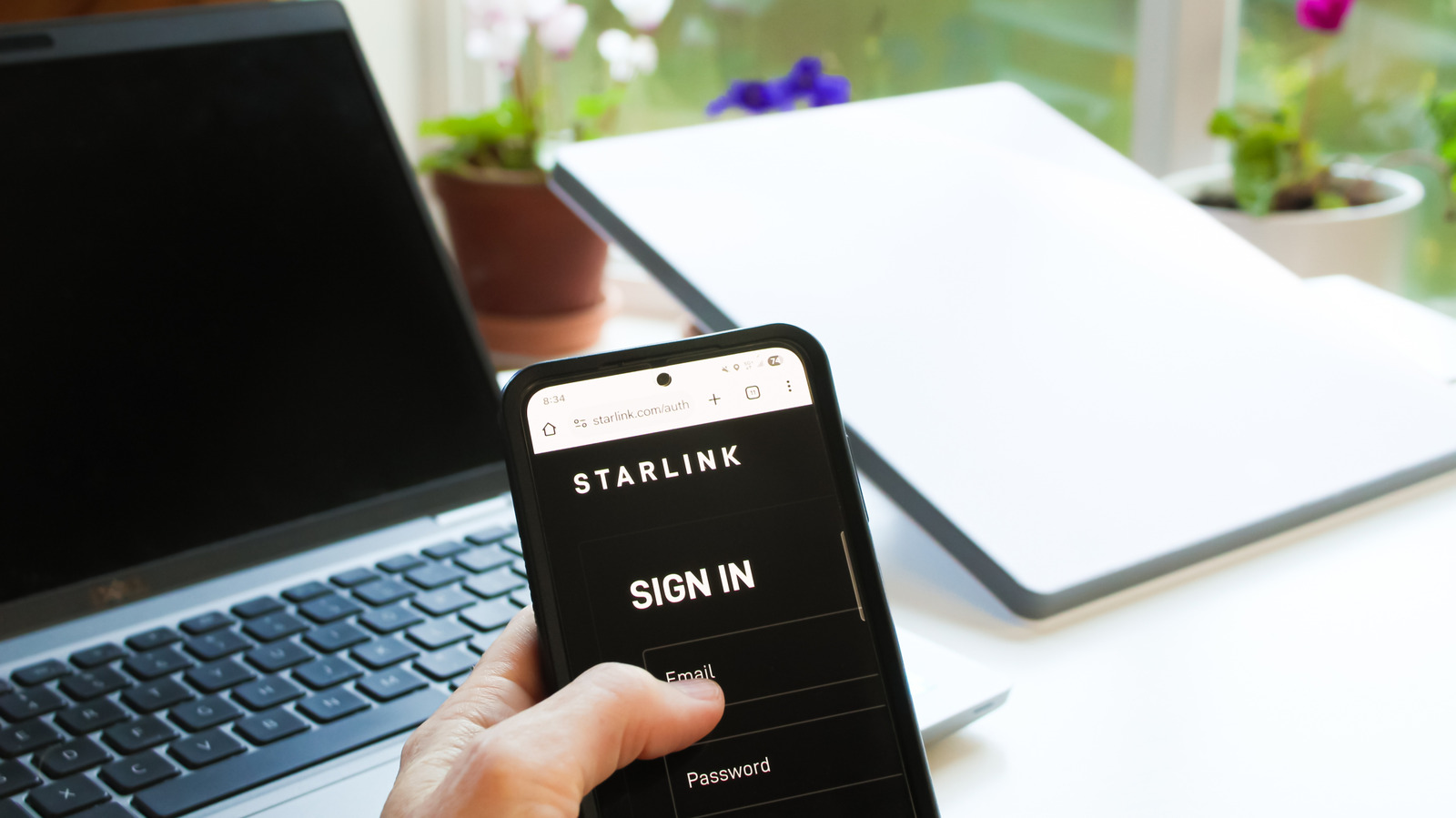
Starlink’s compact Mini terminal is designed to move, yet the company explicitly supports both fixed and portable use, which means it can serve as a full-time home connection. Engadget highlights the financial wrinkle: in the US, the Mini is generally attached to Starlink’s Roam plans instead of the Residential lineup.
Roam starts at $55 per month for 100 GB of high-speed data, climbs to $80 for 300 GB, and reaches $175 for unlimited service. Residential plans, by contrast, all include unlimited data: $55 for 100 Mbps, $85 for 200 Mbps, and $130 for the top Residential Max tier. That makes the initial sticker price look equal, but the data allowances are not.
For a vacation cabin, sporadic road trips, or a light-usage household, the 100 GB or 300 GB Roam bucket can be adequate. The calculation changes when the Mini becomes the primary home link. Once a customer exhausts the high-speed allowance, Starlink throttles service to unlimited low-speed data until the next billing cycle. A Roam 100 GB subscriber therefore pays the same $55 entry price as a Residential 100 Mbps customer but receives a capped high-speed pool. To remove the cap entirely, the Roam Unlimited option costs $175 per month—$45 more than Residential Max.
Another drawback is network priority. Starlink gives Residential Max subscribers its highest residential priority and warns that Roam speeds may drop during congestion. A permanently installed Mini can thus end up more expensive for unlimited data while being optimized for portability rather than stationary home use.
Roam plans do have travel benefits: they support movement and can be paused, which makes sense for an RV-mounted Mini but less so for a dish sitting beside a house. Starlink began selling the Mini as a standalone Roam device in the US in 2024, dropping the original requirement for an existing Residential subscription.
For primary home use, Starlink steers customers toward its Standard hardware for streaming, gaming, and video calls, while the Mini is aimed at basic connectivity and portability. The US caveat remains that the Mini is marketed with Roam, so leaving it at home means Roam pricing. Starlink has also started rolling out a smaller V5 residential dish in select regions.
Some existing users have a better deal. Customers who claimed Starlink’s optional Mini kit or bought Residential Max before June 6 can keep a Mini as a no-cost hardware rental and receive 50% off Roam service as long as they maintain the Max subscription. That offer is no longer available to new customers.
The restriction is not universal. Starlink says Mini hardware can use Residential service in limited regions, though it does not name them. The Mini’s built-in Wi-Fi covers up to 1,200 square feet, compared with 3,200 square feet for the Standard terminal.
See an error? Read our corrections policy or email [email protected].