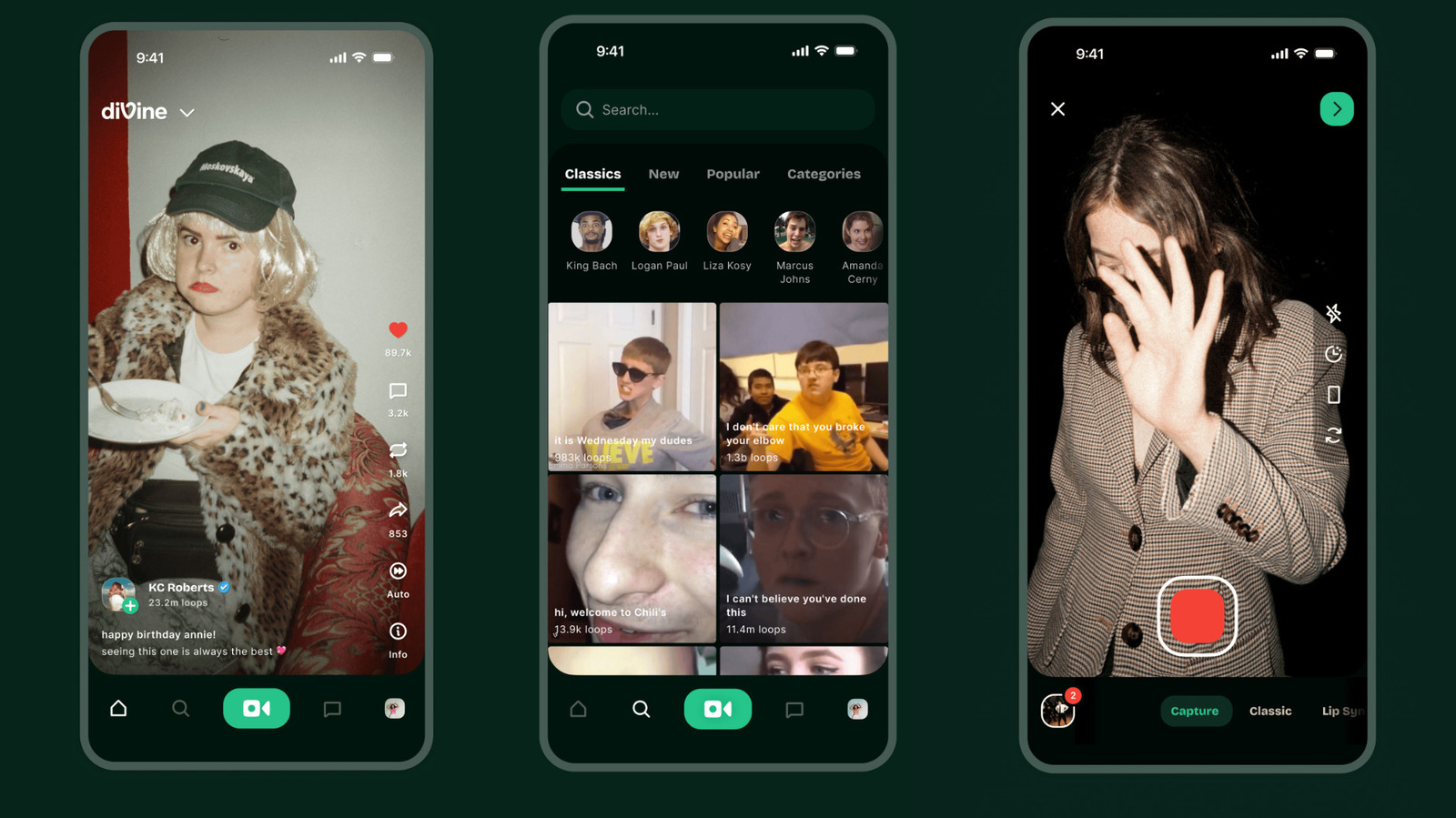
The invitation-only era for Divine, the app conceived as a spiritual successor to the short-lived looping video platform Vine, has come to an end. As of now, anyone can sign up without a code, marking a significant expansion for the project that emerged from a desire to recapture the creative spark of the original Vine community.
Divine's public availability comes just over three months after its initial private beta. The app centers on the classic six-second looping video format that made Vine a cultural phenomenon. A key feature is a curated "classic" feed containing over two million videos recovered from the original Vine archive, offering users a nostalgic trip back to the platform's heyday.
While not an official Vine reboot, Divine shares DNA with the original: it is funded by Twitter co-founder Jack Dorsey, though he holds no equity. The app is built on the decentralized nostr protocol, which Dorsey has also supported, aligning with a broader push toward user-controlled social networks.
Divine positions itself as a counterpoint to AI-generated content. Users can only share videos shot within the app's camera, and built-in detection tools help verify authenticity. This focus on human-made content is a deliberate choice to differentiate from platforms like TikTok and Instagram, which often see repurposed material.
Creator Evan "Rabble" Henshaw-Plath, an early Twitter employee, emphasizes that Divine's content is unique: videos are either from the original Vine archive or newly created within the app. He notes that the platform avoids the common social media practice of sharing the same clips across multiple services.
Monetization is a future priority. Henshaw-Plath acknowledges that many Vine creators left due to lack of support, and he wants to provide Divine's creators with revenue opportunities as they build audiences, though the exact mechanisms are still being determined.
The public launch taps into a wave of nostalgia for early social media, as seen with recent speculation about a Myspace comeback. Divine's approach—decentralized, AI-free, and archive-rich—may appeal to those seeking a simpler, more creative online space. Henshaw-Plath hopes to avoid the pitfalls of centralized platforms by design, aiming to prevent future "enshittification" and empower users to shape the platform's direction.
See an error? Read our corrections policy or email [email protected].