AMD vs. Intel in 2026: Gaming and Productivity Point in Different Directions
Engadget's CPU comparison finds AMD's X3D chips leading in games while Intel's core-heavy designs often win on creative work and low-end value. Current prices and platform support still shape the decision.

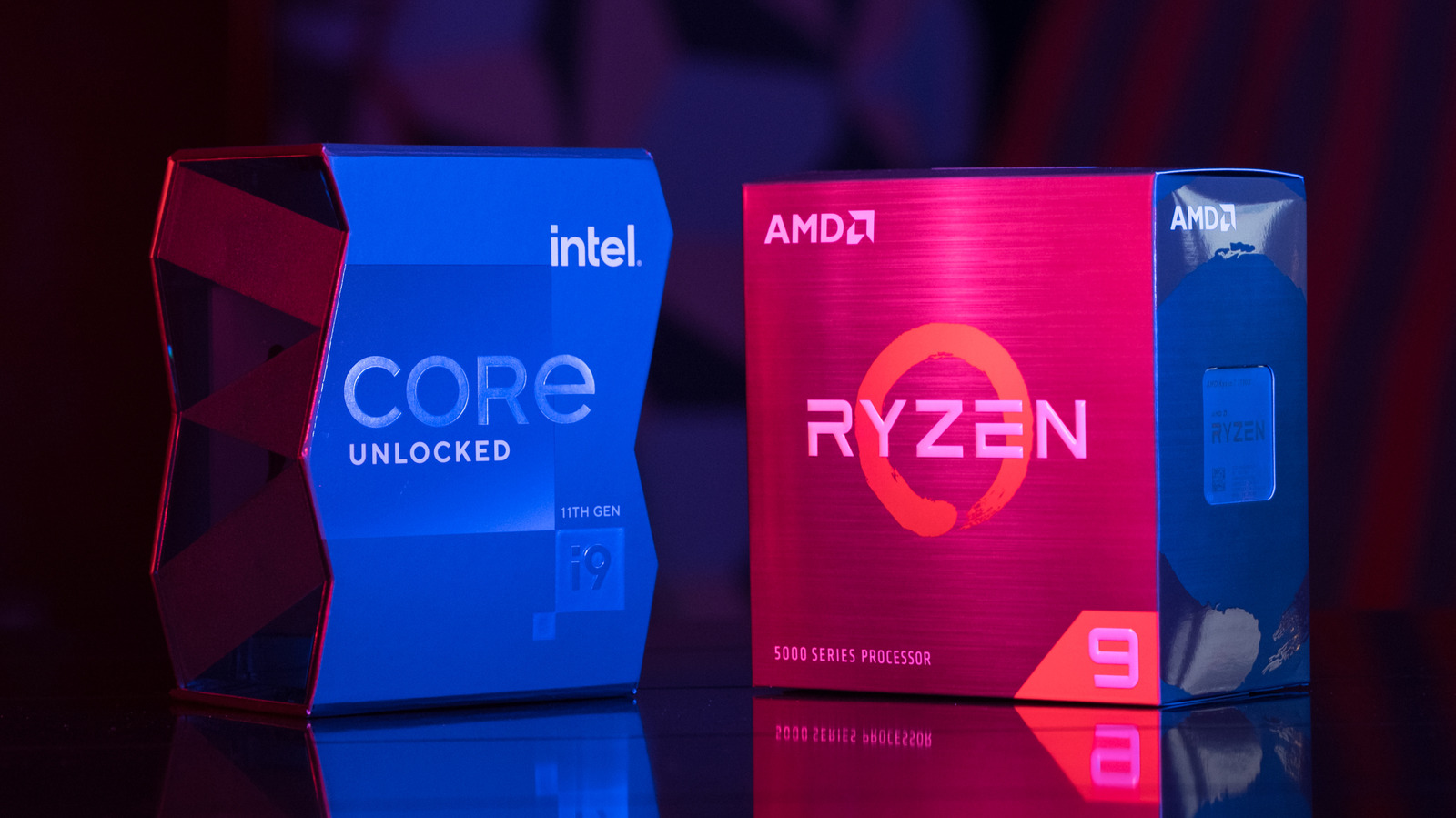
Engadget's 2026 processor buying guide concludes there is no single winner between AMD and Intel; the decision hinges on workload, budget and how long a buyer plans to keep a platform. The piece draws on testing from Tom's Hardware, TechPowerUp, Notebookcheck, TechSpot and PCWorld, which means the benchmark figures should be treated as reviewer-dependent rather than definitive.
Market data tells a different story from enthusiast opinion. Engadget cites Mercury Research figures showing AMD at 34.9 percent of desktop CPU shipments in the second quarter of 2026, leaving Intel with roughly two-thirds of desktops and about seven of every ten laptops. Those shipments do not settle performance questions, but they show Intel's OEM presence remains large, particularly in notebooks.
The architectures explain the split. AMD's Ryzen 9000 chips use Zen 5 chiplets, with separate compute and I/O dies; X3D models stack an extra cache die for 96MB of L3 cache in total. Intel's Core Ultra 200S Arrow Lake parts use tiles and combine performance and efficiency cores, and Intel has removed Hyper-Threading from these designs. Engadget's interpretation is that cache tends to help games while core count tends to help rendering, video export, compilation and heavy multitasking — a useful rule of thumb rather than a guarantee.
In the cited game tests, AMD leads. Engadget reports Tom's Hardware finding the older Ryzen 7 7800X3D roughly 10 percent faster on average than Intel's Core Ultra 7 270K Plus, with 68 percent more frames per watt. At the high end, the Ryzen 9 9950X3D was about 37 percent faster at 1080p than the Core Ultra 9 285K in the same testing. Notebookcheck named the Ryzen 7 9850X3D the best gaming CPU, though Engadget notes its margin over the 9800X3D is small. Reviewers diverge at the low end: TechPowerUp found the Ryzen 5 9600X and Core Ultra 5 250K Plus comparable in games, while Notebookcheck put AMD ahead.
Productivity often reverses the result. Hardware Unboxed's Cinebench 2026 multi-core run, cited by Engadget, gave the $199 Core Ultra 5 250K Plus an 85 percent advantage over the Ryzen 5 9600X. In the midrange, Notebookcheck's Blender test put Intel's $299 Core Ultra 7 270K Plus roughly level with AMD's Ryzen 9 9950X, which launched at $649. At the top, the 9950X3D and 285K were close in Cinebench single- and multi-core tests, while Tom's Hardware found AMD ahead in several productivity workloads.
Price reframes the advice. Near $200, Engadget calls Intel's 250K Plus the better all-rounder and the 9600X the choice for a gaming-only AM5 build. Near $300, the 270K Plus is the balanced option, with the 7800X3D the gaming pick if it sells in that range. Between $450 and $700, AMD's X3D chips are the gaming defaults and the 9950X3D suits buyers who also do heavy creative work; Intel's 285K is framed as sensible mainly for people who rarely game. Engadget cautions that CPU prices move and that memory and storage costs have raised full-system prices.
Platform longevity is AMD's quieter argument. Engadget reports AM5 support committed through 2029, with the AM4 track record as context, though future board compatibility is not assured. Intel has no announced upgrade path in the piece, and Engadget notes conflicting Nova Lake timing: the CEO pointed to the end of 2026 while investor relations suggested late 2026 into 2027.
The guide also names parts to avoid: Intel's 13th- and 14th-gen desktop chips had a voltage flaw causing crashes and permanent damage, addressed by microcode updates with warranties extended from three to five years, and used chips carry risk. It advises skipping the Ryzen 7 7700X3D when the 7800X3D costs about the same, and the original Core Ultra 7 265K when the 270K Plus is faster in multithreaded work. In laptops Intel remains dominant, with Panther Lake praised for efficiency, and Intel Macs lose major macOS updates after Tahoe, with security patches through September 2028. The takeaway is to match the chip to the workload rather than to a brand.
Sources and further reading
See an error? Read our corrections policy or email [email protected].