The Tilde Key: From Mainframes to Modern Code
The tilde (~) key, often overlooked, has been a programming staple since 1965. Engadget explains its many uses, from bitwise operations to memory management.

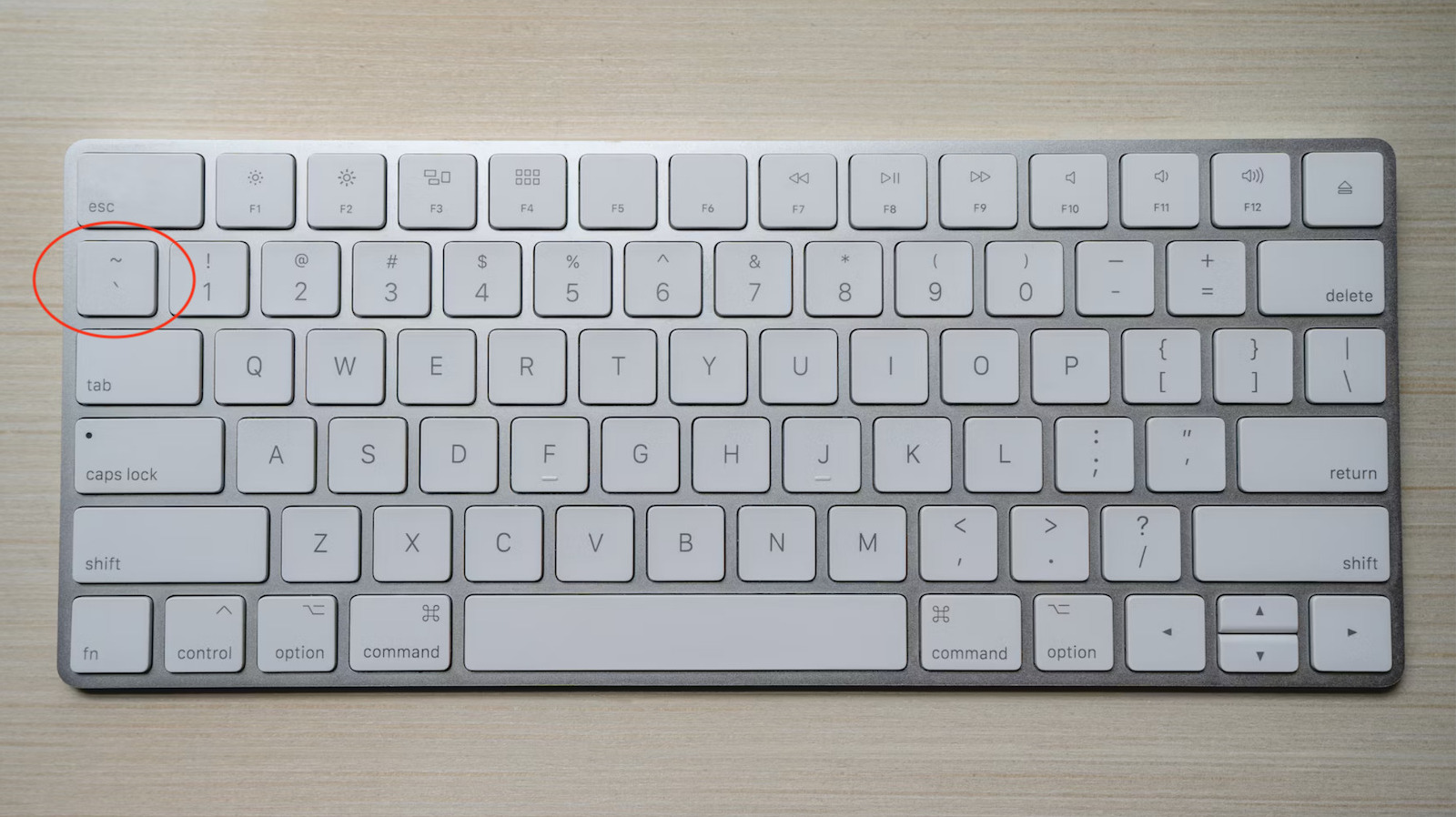
The tilde (~) key, located to the left of the "1" on many keyboards, is more than just a symbol for approximation or a diacritical mark in languages like Spanish and Portuguese. According to Engadget, it has been a crucial tool for programmers since it first appeared on computer keyboards in 1965 during the mainframe era.
Engadget details several key uses of the tilde in programming. In languages such as JavaScript, C, C++, and Python, the tilde serves as the bitwise NOT operator. This operation inverts all bits of a binary number, turning zeroes into ones and vice versa. For example, "0010" becomes "1101." This is particularly useful for optimizing systems and was historically used in video game graphics to quickly invert colors. It also helps in indexing files and finding missing elements in strings.
A double tilde (~~) is sometimes used as a double bitwise NOT operator, typically to truncate decimals.
In C++ and C#, the tilde is used to denote a class destructor, a special function that runs when an object is deleted. Destructors are primarily used to clean up resources and free allocated memory. Engadget notes that video game programmers use destructors to free memory when objects like enemies, projectiles, or UI windows leave a player's field of view. This eliminates texture buffers, physics engines, and other connected resources. Without such memory management, large-scale open-world games would struggle to run smoothly, as unused assets would continue to consume memory and slow performance.
In CSS, the tilde is used as a general sibling selector. This selector targets all matching elements that follow the tilde, allowing programmers to apply styles to elements that are not directly adjacent. This differs from the adjacent sibling selector, which uses the plus sign (+) and only selects the immediately following element. Engadget explains that the general sibling selector is useful for changing visual elements of a user interface, website, or web app, and is often found in web-based games, game launchers, store pages, and settings menus, where quick visual changes are needed.
While the article does not provide specific guidance on upgrades, it highlights the tilde's enduring relevance across various programming contexts. The symbol's versatility, from low-level bit manipulation to high-level styling, underscores its importance in a programmer's toolkit.
Sources and further reading
See an error? Read our corrections policy or email [email protected].