The NPU Inside Your New Laptop Is Probably Sitting Idle
Neural processing units are now standard in mid-range and premium laptops, largely because of Microsoft's Copilot+ certification rather than buyer demand. Engadget's hands-on testing shows what the silicon can actually do — and why most owners will never notice it.

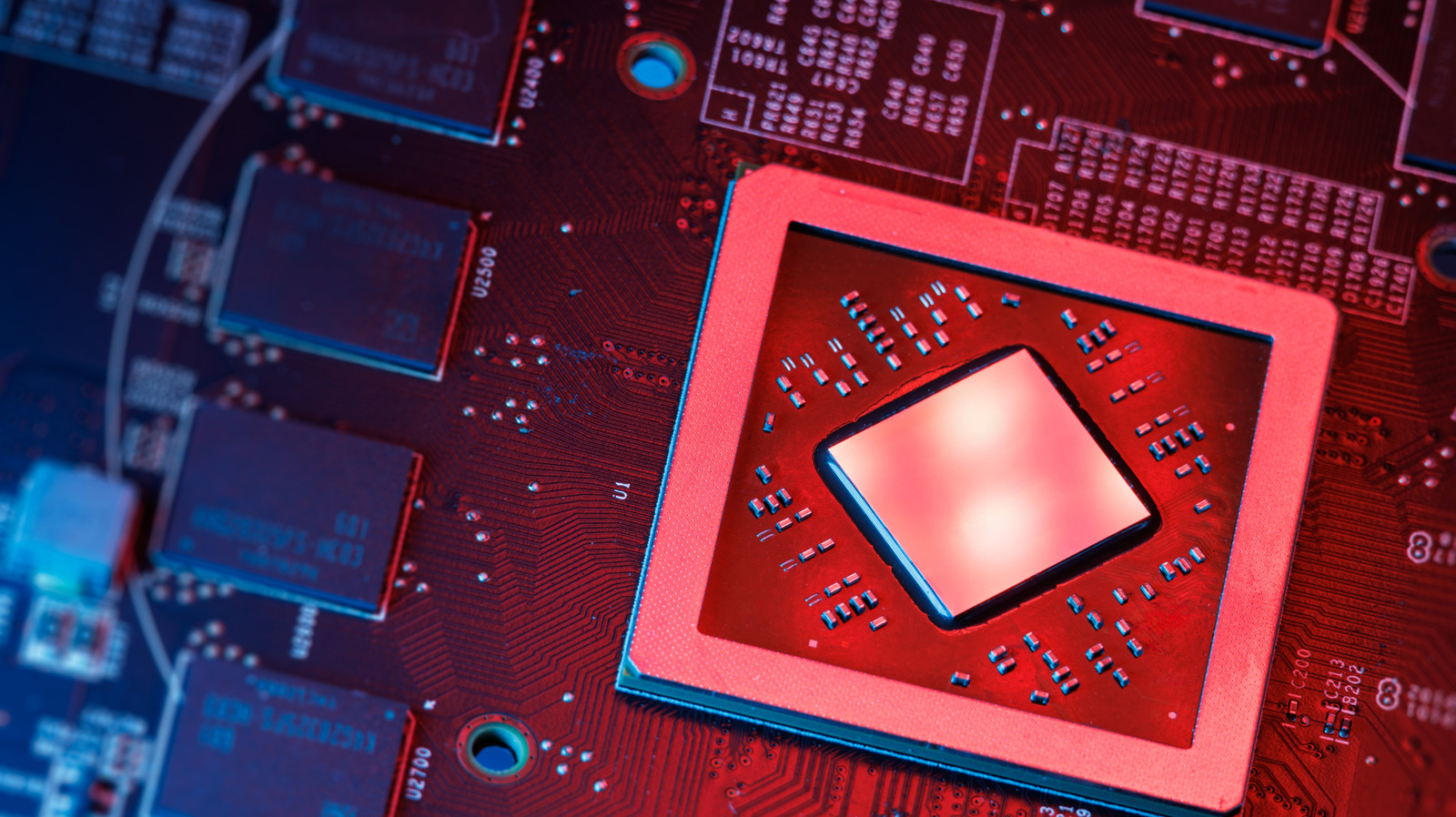
Neural processing units have quietly become a standard component of mid-range and premium laptops. According to Engadget's examination of the hardware and its own testing, most people who own one are not using it.
An NPU is a dedicated block of silicon built to run AI inference — the phase where a trained model produces output — as opposed to training. Engadget notes that the work involved leans heavily on matrix multiplication and nonlinear activation functions, operations an NPU is purpose-built to execute efficiently. The trade-off is narrower flexibility than a general-purpose CPU or GPU.
The efficiency gap is the selling point. Engadget puts NPU power draw at roughly 2W for a given AI task, against well over 100W for laptop discrete graphics performing comparable work. A common example is webcam background blur, which can run on a CPU or GPU but drains battery and spins up fans on a thin machine. Handled by an NPU, the same effect can stay on for a long stretch without that cost.
Certification, not demand, is driving adoption
Engadget reports that advisory firm Gartner estimates AI-capable PCs now account for more than half of global shipments. The article attributes that shift less to consumer appetite than to certification: in 2024 Microsoft effectively required laptop makers to include a 40 TOPS NPU, alongside 16GB of RAM and 256GB of storage, to earn Copilot+ PC status and unlock certain on-device Windows AI features. The TOPS threshold must be met by the NPU specifically — Engadget points out that a mid-range RTX 4050 exceeds 190 TOPS from its tensor cores and still does not qualify.
Vendors have kept pushing the figure upward. Engadget cites Qualcomm's Snapdragon X Elite and Plus at 45 TOPS, Intel's Lunar Lake at up to 48, AMD's Ryzen AI 300 at 50, Intel's Panther Lake (Core Ultra Series 3) at 50 NPU TOPS on the 18A process, and Qualcomm's Snapdragon X2 Elite at up to 85 TOPS. Software that uses that capacity remains limited, per the article, and Dell has already shipped an enterprise-grade NPU in its Pro Max Plus laptop.
What actually uses it
Engadget lists a short roster: Windows Studio Effects, Live Captions, Recall and Click to Do, noise suppression in Teams and Zoom, and some Adobe Creative Cloud features. On Windows 11, Task Manager displays NPU utilization; on the reviewer's 2024 ASUS Zenbook Duo UX8406 with 32GB of RAM, Engadget reports that figure sitting at zero.
Testing produced a more concrete picture. Engadget ran the Mistral 7B open-source model through Intel's OpenVINO toolkit on a machine rated at 34 platform TOPS, of which 11 are dedicated to the NPU. The NPU reached 98 percent utilization while the CPU stayed near 3 percent, and the laptop remained responsive. Running the same model on the CPU via Ollama pushed CPU usage to 52 percent with memory around 17GB of the available 32GB — a load Engadget says would have stalled the machine alongside other CPU-heavy work.
That contrast is the core argument for the hardware: it absorbs an AI workload without degrading everything else. The catch, per Engadget, is that getting there required a specific toolkit and technical know-how, and few applications support the NPU natively.
Who should care
Interpretation, not confirmed fact: the practical case for an NPU today is narrow — always-on, low-power tasks such as video effects, voice isolation, captions and local indexing. Engadget is explicit that NPUs are unsuited to training, that large local models such as Llama 70B still call for a discrete GPU with substantial video memory, and that cloud services like ChatGPT and Gemini do not need one at all. Buyers weighing an upgrade should treat TOPS figures as a certification metric rather than a measure of what they will feel day to day.
Sources and further reading
See an error? Read our corrections policy or email [email protected].