Pixel or Galaxy: What Switchers Actually Gain, and What They Give Up
Engadget's comparison of Google's Pixel line and Samsung's Galaxy range finds the decision hinges less on which phone is better and more on how much choice, customization and hardware you want to trade for cleaner software.

The framing
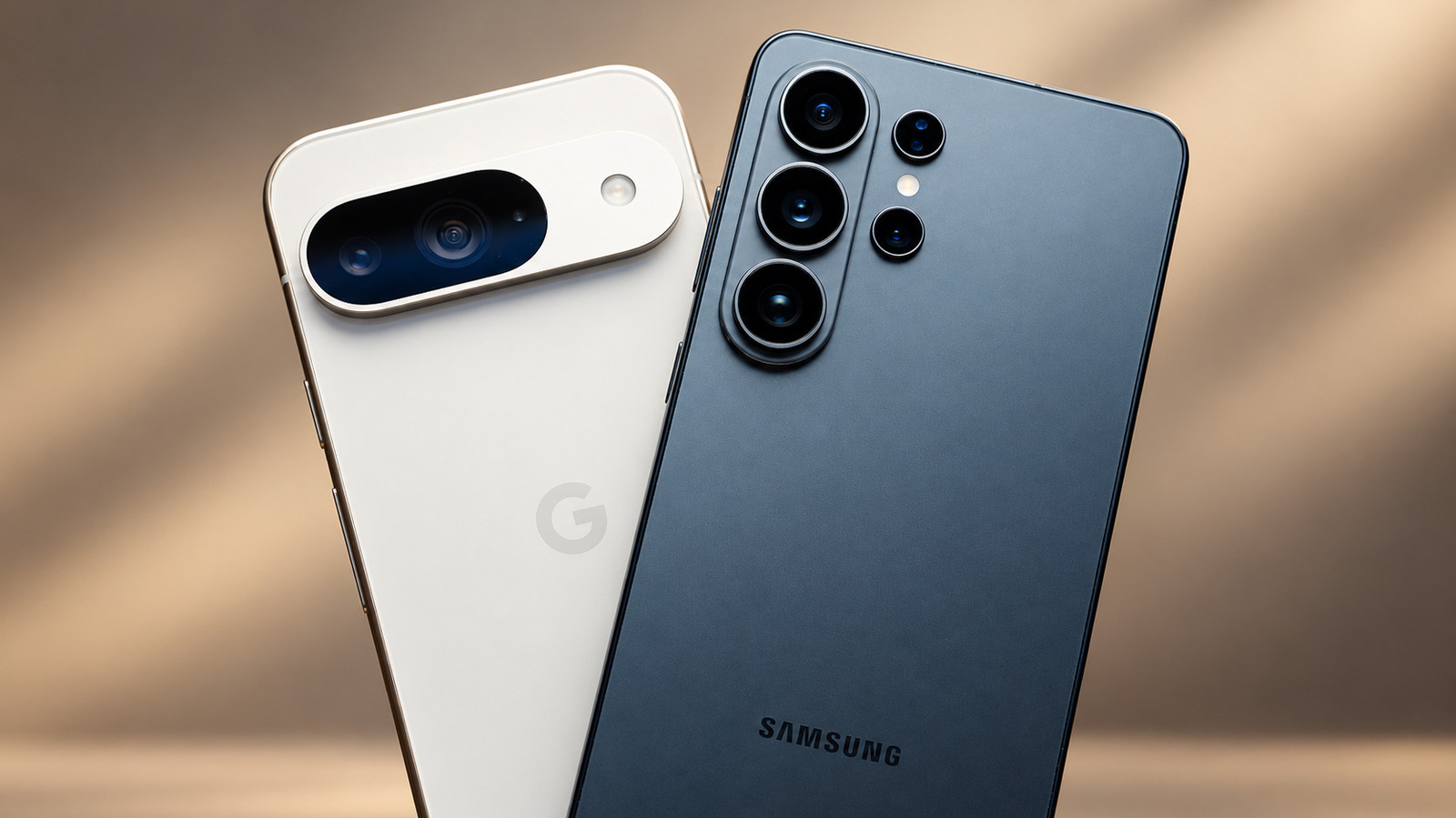
Engadget's comparison treats the Pixel-to-Galaxy question as a trade rather than a clear win for either side. The publication's guidance is that the answer depends on the specific model, its price against what it delivers, and which software philosophy a buyer prefers.
Hardware breadth favors Samsung
According to Engadget, Samsung's US storefront carries 15 distinct Galaxy models across its A, S and Z families, while Google's US storefront lists seven main Pixel products. That wider range includes budget-to-mid-range A-series devices, the S-series flagships and the Z Flip and Z Fold foldables.
The report cautions that a larger catalogue does not mean uniform capability. Engadget notes the Galaxy A37 omits DeX and wireless charging, yet carries a 45W wired charging rating — above the standard Galaxy S26's 25W.
Software: tidier versus more configurable
On the Google side, Engadget credits the Pixel with a cleaner interface and earlier access to new Google features. On the Samsung side, the Good Lock toolset allows finer adjustments to Quick Settings and the lock screen, and the Modes and Routines feature can switch those settings automatically according to a user's routine.
Pixel-specific conveniences do not necessarily follow a switcher across. Engadget points to Google's Call Screen as an example, noting Samsung offers its own screening feature on compatible handsets. Both platforms now cover desktop-style use — DeX on supported Galaxy phones, and desktop windowing on supported Pixels. Engadget singles out the Galaxy S26 Ultra's integrated S Pen and Privacy Display, which limits viewing angles to keep nearby onlookers from reading the screen, as features aimed at buyers wanting exclusivity.
Cameras and review scores
Engadget's own reviews put the Pixel 11 ahead of the Galaxy S26 by 92/100 to 80/100 — the same pattern the outlet recorded the previous year with the Pixel 10 and Galaxy S25. The Pixel 11 carries a 5x optical telephoto camera against the S26's 3x, plus built-in magnets for Pixelsnap accessories, where Galaxy S26 owners need a compatible case for comparable magnetic attachment.
The Pixel 11 Pro and Galaxy S26 Ultra were much closer in testing, both scoring 90/100, which Engadget says makes that particular pairing harder to call.
One reviewer's hands-on impressions
The piece includes a first-person account from a writer who moved from a Pixel 10 Pro XL to a Galaxy S26 Ultra. Reported gains: more speed, better battery life, the S Pen, faster charging and a generally solid AI feature set, including Photo Assist for removing unwanted objects from photos and Note Assist for summarizing Samsung Notes content. Reported drawbacks: persistent prompts steering the user toward Samsung's own apps over Google services already in use, and missing the Pixel's interface and early access to Google features. Finding cases for the Ultra was described as easier.
Price and timing
Engadget notes that Galaxy S flagships launch months ahead of Google's late-summer Pixels, giving Samsung's phones more time to accumulate discounts. The 256GB Galaxy S25 reportedly fell from $860 to $660 in an October 2025 sale.
Current list prices cited: the Pixel 10a at $599, the Galaxy A37 at $490 and the Galaxy A57 at $600. Samsung raised the Galaxy S26's US list price from $899 to $999 in October, leaving it $100 above the Pixel 11's $899 starting figure. Engadget adds that major carriers promote both lines heavily, so the better deal depends on model and trade-in terms.
In the budget tier, Engadget notes the Pixel 10a offers wireless charging and seven years of software updates, while the Galaxy A37 has a slightly larger 6.7-inch display, 45W wired charging and six years of updates.
Before trading in
Samsung's Smart Switch can move photos, messages and supported apps, but Engadget warns that private app data and game progress may not come across. Users are advised to confirm backups and logins before handing over a Pixel, to avoid rebuilding app configurations from scratch.
Who this is for
Interpretation, not reported fact: readers drawn to foldables, an S Pen, granular interface control or a broader hardware menu have the clearer case for Samsung. Readers who value a leaner interface, earlier access to Google features and the camera behavior Engadget rates highly have reasons to stay put. Anyone indifferent to both sets of extras is, on this evidence, choosing between two capable Android phones.
Sources and further reading
See an error? Read our corrections policy or email [email protected].